


Evening Standard/London
Ed Miliband has insisted Labour must have the “courage to change” as union reforms were overwhelmingly backed today.
Speaking at a conference of unions, MPs and delegates in east London, the Labour leader said changes could pave the way for the party to sweep to power in next year’s general election.
The changes were backed by 86 to 14 at the conference as speakers praised the changes to the party’s structures following the row over Unite’s involvement in the selection of a Labour candidate in Falkirk last year.
The Labour leader said he wanted to “nail the myth” that the biggest transfer of power in his party’s history would weaken its ties with the working classes.
“I am proud of our link with working people and with trade unions,” he told the audience.
“I want to hear the voices of working people to be heard louder in our party than ever before and in the 21st century not everyone wants to be a member of a political party.”
Former Labour leader Tony Blair had earlier thrown his support behind the the “long overdue reform” and praised Miliband’s “courage” in pushing them through.
A defiant Len McCluskey, general secretary of Unite, said the changes would increase trade union involvement in the party and insisted Unite was “going nowhere”.
But Dave Prentis, leader of Unison, said consultation over the reforms had been a “distraction”.
He said: “Today is about putting all this behind us. An internal divisive argument that should never have happened.”
Prentis drew applause when he said Labour should be spelling out policies on the living wage and rebuilding the NHS, not “futile arguments” about the link with unions.
Paul Kenny, leader of the GMB, said unions would not support any changes to having a collective voice at Labour conferences or on the party’s executive.
Miliband said he had taken a “big risk” last July when he proposed the reforms.
“I did not believe we could face up to the challenges the country faced if we didn’t face up to the challenges faced by our party.”
He told delegates that some people in Britain had felt that Labour had lost touch with them, adding: “These changes are designed to ensure that this party never loses touch again.”
The reforms that will dilute its historical links with the trade unions—at the risk of losing millions of pounds in political donations.
Miliband insisted: “I don’t want to break the link with working people. I want to hear the voices of working people louder than ever before.”
Under the reforms, the electoral college system used to choose the Labour leader will be scrapped in favour of giving a vote to each individual member.
Currently the unions, party members and elected members of parliament each cast a block vote—a system that Miliband used to his advantage when he narrowly beat his brother to the leadership in 2010 with union support.
The party has also voted to end the process by which union members are automatically affiliated to Labour and a donation is paid on their behalf, unless they opt out.
Members of the unions, which helped found the Labour party in 1900, will now have to actively opt in. Many are expected not to bother, with the result that Labour is likely to suffer a major cut in funding.
The GMB union has already slashed its affiliation funding, and Britain’s biggest union Unite will discuss its arrangements next week. It has warned that only 10% of its 1mn members were likely to stay with Labour.
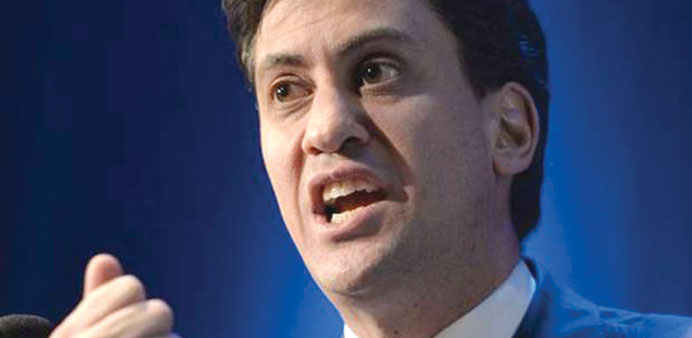
Ed Miliband’s plans have been backed by Tony Blair.