


By Joseph Varghese
Staff Reporter
|
|
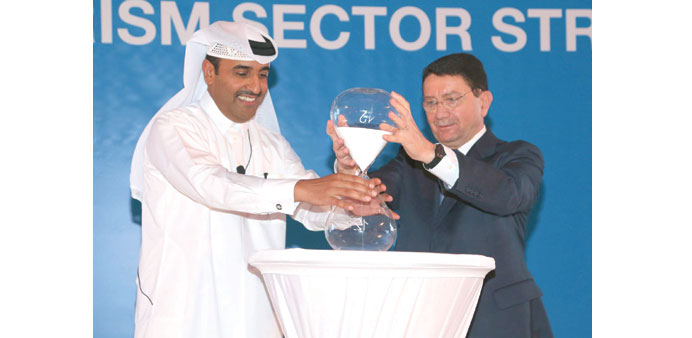
An ambitious plan aimed at positioning Qatar as a “world-class tourism hub with deep cultural roots” has been unveiled at the Katara cultural village.
The Qatar National Tourism Sector Strategy 2030 sets out the road map to cater to as much as 7mn annual visitors by 2030 and contribute to efforts to diversify the national economy in a sustainable manner.
Qatar Tourism Authority (QTA) chairman Issa bin Mohamed al-Mohannadi unveiled the National Tourism Sector Strategy 2030 which draws inspiration from the Qatar National Vision 2030 and the National Development Strategy 2011-2016. The launch event on Sunday was attended by UN World Tourism Organisation secretary general Taleb Rifai, ministers, senior government officials and industry stakeholders. Present on the occasion was HE Sheikha Mayassa bint Hamad bin Khalifa al-Thani, chairperson of the Board of Qatar Museums Authority.
“The National Tourism Sector Strategy 2030 envisions positioning Qatar as “a world-class hub with deep cultural roots”, further placing the country on the world tourism map and allowing people from around the world to recognise and appreciate what it has to offer via its unique culture and heritage,” a QTA statement said.
“Tourism is a vital pillar in Qatar’s development efforts and a key driver of socio-economic growth in the country” said al-Mohannadi.
The strategy is set to expand the economy, grow the number of small and medium enterprises (SMEs) and seeks a greater role for the private sector in the economy. By 2030, the strategy is set to increase tourism’s total contribution to the national GDP, enhance the total tourist spend in Qatar to nearly $10.7bn and achieve a greater balance in the breakdown of tourists to Qatar by market of origin and purpose of visit.
More than 60 new strategic tourism development initiatives are in the pipeline, with the first of them having already been launched in January this year. The plan will create 127,000 jobs in the tourism trade and lead to the building of more than 62,000 hotel rooms and encourage entrepreneurship and a greater role for the private sector in the economy.
QTA director of strategy Hassan al-Ibrahim said: “Our aim is to have the tourism industry contribute a total of 5.1% to GDP by 2030, up from 2.6% today. About $45bn of investments by the government and the private sector will make this vision a reality.”
In 2012, 1.2mn visitors made their way to Qatar, mainly from other GCC countries. “Our target is to attract 7mn visitors to Qatar from all over the world by 2030,” said al-Ibrahim.
Towards achieving this goal, QTA has already set up satellite offices in London and Paris, with eight more international offices set to open in the near future in key outbound markets.
The strategy builds on the current growth in tourism in Qatar and the development of first-rate infrastructure that has created an environment highly conducive to tourism through the exponential increase in the number of quality hotels and the construction of an advanced transport network. The new Doha Exhibition and Convention Centre (DECC) is scheduled to open this year and will be a game-changer for the meetings, incentives, conferences, and exhibitions (MICE) sector.
Also opening this year is the Hamad International Airport which is destined to become an important hub for transit passengers.