


By Dr Ashly Shajumon
Are you hiding an awful, painful ulcer in your mouth? Did you know that mouth ulcers are so common that most people will have at least once during their lifetime. Although they are generally harmless, ulcers can be very painful and irritating. To a large extent this could be avoided with a healthy lifestyle. Read more about ulcers and bring back the smile to your face.
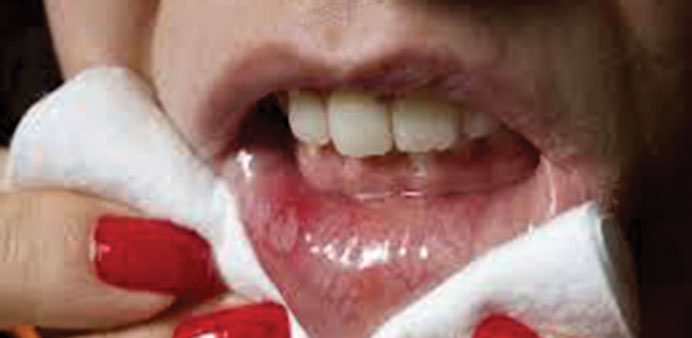
Mouth ulcers are sores that appear in the mouth, often on the inside of the cheeks. Mouth ulcers are painful, clearly defined, round or oval sores that form in the mouth. They are sometimes also known as aphthous ulcers. Although mouth ulcers can be uncomfortable, especially when you eat, drink or brush your teeth, they are harmless.
Most mouth ulcers clear up by themselves within a couple of weeks. You only need to see a doctor if the ulcer gets worse or lasts for longer than three weeks. A mouth ulcer is the loss or erosion of part of the delicate tissue that lines the inside of the mouth (mucous membrane).
Some of the causes include certain drugs, chemicals and infectious diseases such as herpes or thrush. The most common cause is injury, such as accidentally biting your cheek.
Types of mouth ulcer
Aphthous stomatitis (commonly called ‘canker sores’)
Minor ulcers: These are around 2-8mm in diameter and usually clear up in 10 days to 2 weeks.
Major ulcers: These are bigger and deeper, often with a raised or irregular border. This type of ulcer can take several weeks to heal and may leave a scar in the mouth.
Herpetiform ulcers: This type of ulcer is a cluster of dozens of smaller sores the size of pinheads. The number of ulcers can range from five to 100. These tiny ulcers often fuse together to form larger, irregular shaped sores, which are very painful. Around five to 10% of mouth ulcers are herpetiform. Herpetiform ulcers are not related to the herpes virus.
What are the symptoms of mouth ulcers?
You may have a mouth ulcer if you have:
l A painful sore or sores inside your mouth, on the tongue, soft palate (the back portion of the roof of your mouth), or inside your cheeks.
l Sores in your mouth that are round, white, or grey in colour, with a red edge or border.
In severe mouth ulcer attacks, one may also experience:
l Fever
l Physical sluggishness
l Swollen lymph nodes
What are the causes of mouth ulcers?
Mouth ulcers aren’t usually infectious, which means they can’t be passed from person to person.
That means mouth ulcers are not spread from kissing someone who has one, or by sharing drinking glasses or cutlery with them. Most minor, single mouth ulcers are caused by damage to the mouth, such as, by accidentally biting the inside of your cheek while you are eating, by using a toothbrush incorrectly, or from a sharp tooth, food or filling.
Other causes of more troublesome mouth ulcers, or ones that keep coming back, include:
Stress and anxiety: Some people develop mouth ulcers during times of stress or when they’re feeling particularly anxious.
Hormonal changes: Some women develop mouth ulcers during their monthly period.
Family history: Around 40% of people who have recurrent mouth ulcers report that it runs in their family.
Food triggers: Eating certain foods can increase your likelihood of mouth ulcers. Culprit foods include:
l Chocolate
l Coffee
l Peanuts
l Almonds
l Strawberries
l Cheese
l Tomatoes
l Wheat flour
Stopping smoking: When you first stop smoking, you may find that you develop mouth ulcers. This is a normal reaction. Your body is dealing with the change in chemicals in your body. After giving up smoking, any increase in mouth ulcers will be temporary, so don’t let it put you off stopping smoking. The long-term health benefits of not smoking are far greater than the short-term discomfort of mouth ulcers.
Medical conditions: If someone has mouth ulcers that keep returning, they may be caused by an underlying medical condition such as:
Vitamin B12 deficiency: A lack of vitamin B12 can cause tiredness, shortness of breath and mouth ulcers.
Iron deficiency: If a person’s diet is lacking in iron, their red blood cells are unable to carry as much oxygen. This can make them feel tired, lacking energy and dizzy. Sometimes, an iron deficiency can also cause mouth ulcers.
Coeliac disease: This is caused by intolerance to a protein called gluten, which is found in wheat, rye and barley. The condition causes the small intestine to become inflamed. Mouth ulcers are also a common symptom of coeliac disease.
Crohn’s disease: This is a condition that causes inflammation of the gut, leading to ulcers developing in both your stomach and mouth.
Reactive arthritis: This is a reaction to another infection within your body. It can cause inflammation, which sometimes spreads to your mouth.
Immunodeficiency: Any condition, such as HIV or lupus that attacks or suppresses the body’s immune system can cause you to develop mouth ulcers.
Medications: Occasionally, mouth ulcers are caused by a reaction to a medicine that is taken by a person. Some of the medicines that can cause mouth ulcers include:
l Non-steroidal anti-inflammatory drugs (NSAIDs) such as ibuprofen and aspirin.
l Nicorandil, a medicine which is sometimes used to treat angina.
l Beta-blockers, which are used to treat a variety of conditions that affect the heart and blood flow, such as angina, heart failure, high blood pressure and abnormal heart rhythms.
l You may notice that you start to get mouth ulcers when you begin taking the medicine, or when you increase the dosage.
l Speak to your physician, if your medication is causing mouth ulcers.
Less common causes: Less common causes may be Herpes simplex infection causing cold sores in the mouth and genitals or gastrointestinal disease such as irritable bowel syndrome (IBS) or even due to sore throat, chickenpox and mouth diseases.
When should I see my doctor?
Simple mouth ulcers do not usually require any formal diagnosis from a doctor. Seek medical advice about mouth ulcers if you have:
Unusually large sores.
Sores that are spreading.
Sores that last three weeks or longer.
Intolerable pain despite avoiding trigger foods and taking over-the-counter pain medication.
Difficulty drinking enough fluids.
A high fever with the appearance of the mouth ulcer(s).
Ulcers get progressively more painful and inflammatory.
Ulcers appear elsewhere in the body.
Prevention
Healthy lifestyle: To prevent getting mouth ulcers, try to avoid becoming run down by eating a healthy, balanced diet, exercising regularly and learning to manage stress effectively. If you are prone to getting recurrent ulcers, avoid damaging the inside of your mouth by using a softer toothbrush. Also avoid hard, brittle or sharp-edged foods. Avoid any foods, medications or oral healthcare products that seem to trigger mouth ulcers. Avoid spicy and acidic food.
Good dental hygiene: Brush your teeth at least twice every day and Floss regularly. Another way to prevent getting mouth ulcers are to make sure that your teeth are healthy by regularly visiting your dentist.
- Dr Ashly Shajumon is a dentist at Aster Medical Centre in Al Rayyan.
Most mouth ulcers clear up by themselves within a couple of weeks. You only need to see a doctor if the ulcer gets worse or lasts for longer than thre