


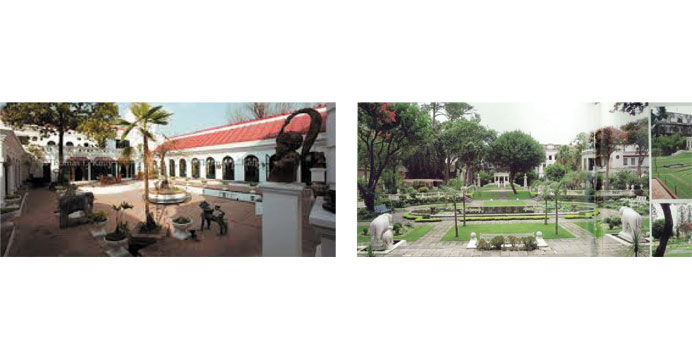
The Nepal government is preparing to lease the Kathmandu-based old palaces for foreign and local investors who are willing to set up businesses catering to tourists in the next fiscal year, officials said yesterday.
The Nepal Tourism Board (NTB), a wing under Nepal’s ministry of tourism, said it has already prepared profiles of 90 historical palaces and buildings in the country’s capital.
“As the spaces and buildings for initiating tourism-related business in Kathmandu is limited, there is still a strong need for them,” Subash Niroula, acting chief of the NTB, told Xinhua yesterday.
The NTB initiated a research, titled ‘A study of historically and architecturally important buildings of Kathmandu Valley’, earlier in 2013 aimed at identifying historically, archeologically and architecturally significant buildings in Kathmandu, especially the grand buildings and palaces built during the Rana era.
“We have prepared the report and are all set to submit it to the tourism ministry for the implementation of the idea,” said Niroula. He added the report would be sumitted next week and the government authorities and other stakeholders would be asked to implement the plan.
Several historic buildings in Kathmandu have already been turned into tourist-catering business enterprises.
Such buildings, including Babar Mahal Revisited, Hotel Shanker and Garden of Dreams among others, are turning out to be must see places for tourists visiting Kathmandu.
The NTB also thought of leasing out most of the old and glorious buildings in Kathmandu and beyond that have been left isolated and are gradually turning to ruins.
“Leasing those buildings will have similar benefits like the preservation of old palaces, generation of revenue for government and attracting high-end tourists to Nepal,” an official in the tourism ministry told Xinhua on condition of anonymity. He added that the idea was still
under consideration.
The NTB plans to identify historic buildings and palaces beyond Kathmandu Valley for tourism once the government implements the idea to lease the buildings in the capital.
On Thursday, Nepal said it will cut climbing fees for Mount Everest to lure more mountaineers to the world’s highest peak, already overcrowded during the peak climbing season.
Hundreds of foreign climbers, each paying thousands of dollars, flock to the 8,850m (29,035 ft) Everest summit during the main climbing season stretching from March to May.
Under existing rules, Nepal charges $25,000 per climber as a licence fee, or royalty. But a group of seven people can secure a permit for $70,000, a practice officials say encourages climbers to form big groups.
Tourism Ministry official Tilakram Pandey said each climber will be charged $11,000 from next year to end the practice.
“The change in royalty rates will discourage artificially formed groups, where the leader does not even know some of the members in him own team,” Pandey said.
“It will promote responsible and serious climbers.”
He said the new rates will apply for the peak season on the Southeast Ridge, or South Col, route pioneered by New Zealander Sir Edmund Hillary and Tenzing Norgay Sherpa in 1953.
Permits for other routes and for the rest of the year, when the mountain is virtually deserted, will cost as little as $2,500 to encourage off-season climbing, officials said.