


By Noimot Olayiwola/Staff Reporter
Around 7,000 male patients visit the Infertility unit at the Hamad Medical Corporation’s Urology Department every year.
The figure comprises both new and follow-up patients, according to HMC senior urologist, andrologist and microsurgery expert Dr Sami S al-Said.
He was speaking yesterday to journalists, alongside HMC Surgery Department chairman Dr Abdalla al-Ansari and consultant urologist Dr Haitham el-Bardin, on the sidelines of the two-day third Qatar International Male Infertility Conference at the Qatar National Convention Centre.
“We started the Infertility unit about 10 years ago and presently we are running up to 21 clinics per week with between 10-15 separate cases seen daily at the morning, afternoon and evening clinics,” he mentioned.
Male infertility refers to the inability of a male to achieve a pregnancy in a fertile female. In humans, it accounts for 40-50% of infertility.
Male infertility is commonly due to deficiencies in the semen, and semen quality is used as a surrogate measure of male fecundity (the likelihood of achieving pregnancy within a certain period of time).
Factors relating to male infertility include pre-testicular causes (conditions that impede adequate support of the testes), tobacco smoking, deoxyribonucleic acid (DNA) damage, and testicular factor (conditions where the testes produce semen of low quantity and/or poor quality despite adequate hormonal support).
Dr al-Said said that there are two types of treatments for male infertility which are surgical and medical with former proven to be more effective and number one choice by patients.
He also mentioned that stem cell therapy could be the future treatment for infertility.
According to Dr al-Ansari, infertility in Qatar is not only a medical issue but also social and family issue, which is why such a symposium was necessary to shed more light on the subject.
“In order to give the best treatment possible to patients in Qatar, we are always striving to bring the best and latest advances in the field and that is why we have brought in top experts in the field from North America and Europe to this symposium,” he mentioned.
Dr al-Ansari noted that the symposium this is year is different from the previous two saying: “Our conference is getting bigger and better as it is being held in co-ordination with other sections in HMC namely: in vitro fertility (IVF), gynaecology and urology units aside inviting leading experts in gynaecology and IVF from Canada and the US.”
He mentioned that the conference here was one of the few in the Middle East to start streaming live surgery to audience.
“If you are able to successfully showcase live surgery to audience while holding a conference, you have reached expert level and you are more confident to forge ahead,” the official noted adding that the session was also an opportunity to teach and educate the audience comprising doctors, nurses and technicians.
Dr El-Bardin said it took the organising committee up to one year to prepare for the conference which was being held by partners from India and the US.
He mentioned plans to begin research that will redefine genetic abnormalities causing infertility in males in Qatar.
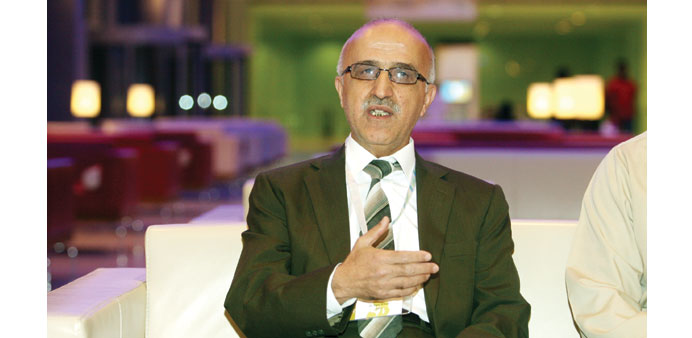
Dr Sami S al-Said.