


Bloomberg/New York
Bank of America Corp’s $8.5bn settlement with mortgage-bond investors, including BlackRock and Pacific Investment Management Co, was largely approved by a New York state judge.
Bank of New York Mellon Corp, the trustee for more than 500 residential mortgage-securitisation trusts, filed a petition in June 2011 seeking approval of the settlement, which aimed to resolve claims that the loans backing the bonds didn’t meet their promised quality. Investors will still be able to pursue loan-modification claims under yesterday’s decision, an obstacle that a bank spokesman said could be addressed.
“This clears a big hurdle for Bank of America,” Paul Miller, an analyst at FBR Capital Markets Corp, said in a phone interview. “It would’ve been a huge headache if it fell apart.”
For Bank of America, the settlement is part of Chief Executive Officer Brian Moynihan’s efforts to resolve liabilities tied to faulty mortgages that have cost the company at least $50bn since the financial crisis, most inherited from its 2008 purchase of Countrywide Financial Corp.
Pools of home loans securitised into bonds were a central part of the housing bubble that helped send the US into the biggest recession since the 1930s. The housing market collapsed, and the crisis swept up lenders and investment banks as the market for the securities evaporated.
Countrywide ranked as the top issuer of the securities in 2005, 2006 and 2007, when the worst-performing debt was created, according to Inside MBS & ABS, a newsletter.
The lender created $405bn of the $3.04tn of bonds sold in those years. Bank of America issued $76.9bn and Merrill Lynch, which was bought by the bank at the start of 2009, and First Franklin, which Merrill Lynch bought at the beginning of 2007, issued a combined $116bn.
New York State Supreme Court Justice Barbara Kapnick in Manhattan authorized Charlotte, North Carolina-based Bank of America’s accord with investors in a judgment issued yesterday. She delayed the entry of the ruling until February 7.
Kapnick qualified her approval of the agreement, allowing loan-modification claims by investors to continue. She said the trustee “abused its discretion” on that issue “without exercising their potential worth or strength.”
Objectors to the settlement included a group of funds known as the Triaxx entities. They argued that pooling and servicing agreements for most of the trusts required Countrywide to buy back modified loans, according to Kapnick’s ruling. Triaxx funds lawyers argued that the trustee failed to investigate about $31bn in modified mortgage repurchase claims.
Kapnick said it was clear that the trustee was aware of the issue with modified loans and included it in a list of settlement issues to discuss with Bank of America, yet chose not to evaluate the potential claims. There’s no evidence to suggest that the language in the agreements doesn’t require the repurchase of modified loans, and the trustee could have hired an expert to examine the provisions that address the buyback of such loans, the judge said.
Bank of America fell 1.1% to $16.75 yesterday in trading in New York, compared with the 1.5% drop for the 24-company KBW Bank Index.
The parties may need to come to a written agreement accepting Kapnick’s order, “assuming that the exclusion of the modification claims are considered to be material,” Barclays analysts including Sandeep Bordia and Jasraj Vaidya said yesterday in a note to investors.
“It is possible that BofA will view this as a minor issue and go ahead with the settlement anyway, since it provides broad relief from rep and warranty and servicing liabilities,” the analysts said. “Still, this issue has the prospect of adding another wrinkle in the timing of the next steps and eventually in determining when the cash flows get paid to bond holders.”
Bank of America is pleased the court approved the settlement, spokesman Lawrence Grayson said in a phone interview. “Any outstanding issues raised in the opinion can be addressed without undue delay,” Grayson said.
Bank of New York Mellon said in a statement that it is “extremely pleased that the court has vindicated the trustee’s actions by overwhelmingly approving the settlement.”
Kathy Patrick, a lawyer representing BlackRock and other institutional investors that supported the agreement, didn’t immediately respond to an e-mail yesterday seeking comment on Kapnick’s decision.
Bank of New York asked the judge to approve the accord under Article 77, a state law that allows trustees to seek judicial consent for their actions, saying the settlement benefits investors by giving them a known recovery instead of years of uncertain and costly litigation.
Kapnick presided over a nine-week settlement hearing that began in June and featured testimony from almost two dozen witnesses, including Bank of America’s chief risk officer, Terrence P Laughlin, who led the settlement negotiations for the lender.
Dozens of investors in the securities objected to the deal, led by American International Group Inc, which said the settlement resolves claims for “pennies on the dollar” while losses totaled more than $100bn. Only about 15 objectors remained as closing arguments in the hearing began in November.
Kapnick found that the trustee “did not abuse its discretion in entering into the settlement agreement and did not act in bad faith or outside the bounds of reasonable judgment.”
“It is clear that the trustee was concerned that Countrywide would be unable to pay a future judgment that exceeded or even approached $8.5bn and thought it was reasonable to lock in a one-time, lump sum payment of $8.5bn on behalf of the covered trusts,” Kapnick said. “This was especially so given the fact that it was uncertain, at best, whether Bank of America would be subject to successor liability.”
AIG said in a statement that it’s “pleased that the court refused to approve the proposed settlement in its entirety” and found that the trustee acted unreasonably in agreeing to compromisebns of dollars of investor claims.“We respectfully disagree with the other aspects of the court’s ruling, which are not supported by the record and which set a dangerous precedent that could eliminate important protections for investors,” said Jon Diat, a spokesman for New York-based AIG.
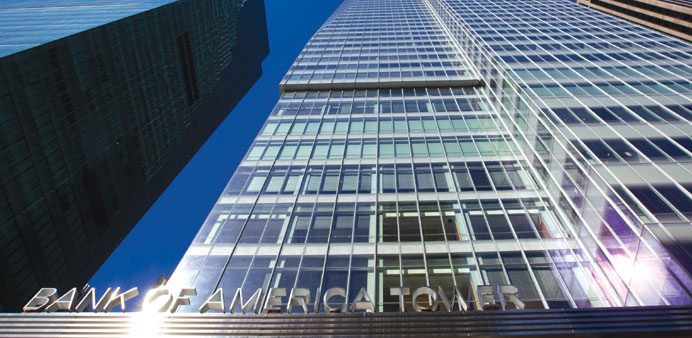
The court approval has cleared a big hurdle for the bank