


|
It was the last, but far from the only, denunciation of abuses during China’s “Cultural Revolution”. It was also a necessary testimony to ponder on the widespread abuses by Chinese citizens during one of that country’s darkest times. |
Song Binbin, daughter of Song Renqiong, one of China’s leaders known as the Eight Immortals, recently repented for her participation in the attacks against a former teacher, Bian Zhongyun, at the time deputy headmaster at a Beijing school. The attacks culminated in the mob beating and death of Bian.
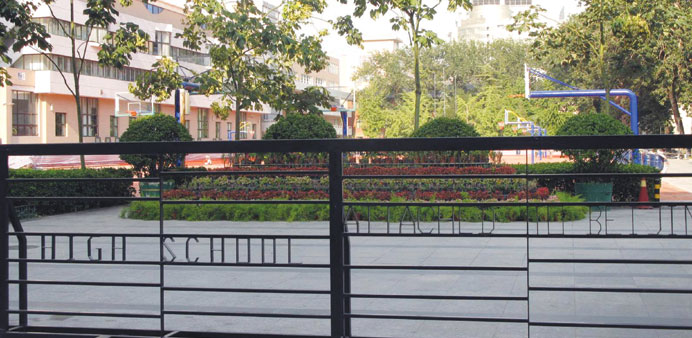
Appearing at the school affiliated with Beijing Normal University, Song Binbin said, “Please allow me to express my everlasting solicitude and apologies to Principal Bian. I failed to protect the school leaders, and this has been a lifelong source of anguish and remorse”, according to The Beijing News.
Song Binbin’s testimony didn’t appease Wang Jingyao, Bian Zhongyun’s widower, who, since his wife’s death has tried to keep his wife memory alive and tried to obtain an honest apology for the perpetrators of his wife’s assassination. “She is a bad person for what she did,” he declared. And he added, “The entire Communist Party and Mao Zedong are also responsible.”
Song’s testimony, and last March’s testimony of Zhang Hongbing, a lawyer who, with his father, denounced his mother, Fang Zhongmou, and made her a target of a brutal killing, are important milestones to reflect on the madness of crowds because of political beliefs. At the time of his mother’s death Zhang was only 16-years-old.
What makes this case particularly painful are the circumstances of Fang Zhongmou’s death. “They beat her, bound her and led her from home. She knelt before the crowds as they denounced her. Then they loaded her on to a truck, drove her to the outskirts of town and shot her,” describes Tania Branigan in The Guardian. “My mother, father and I were devoured by the Cultural Revolution,” declared Zhang. “It was a catastrophe suffered by the Chinese nation” he added.
Zhang’s testimony shows to what extent a person’s mind can change to consider his own mother an enemy. He tells of saying to her mother at the time, “If you go against our dear Chairman Mao I will smash your dog’s head,” he told her. And he added, “I felt this wasn’t my mother. This wasn’t a person. She suddenly became a monster…She had become a class enemy and opened her bloody mouth”. The last time he saw her mother was when she knelt on a stage hours before her death.
More than four decades after his mother’s death, Zhang is trying to atone his unrelenting sense of guilt not only by telling the circumstances of her death but by also calling for the preservation of her grave in their home town of Guzhen, in Anhui province.
The cases just described are just specific examples of a special moment in China’s recent history. When in May 1966 Mao launched that socio-political movement called Cultural Revolution he also unleashed the persecution of millions of people accused of aiming to restore capitalism. In addition to millions of people who were persecuted, abused and killed, millions more were forcibly displaced from the cities to rural areas in what came to be known as Down to the Countryside Movement.
China’s youth responded to Mao’s call by forming Red Guard groups throughout the country. The resulting purge affected not only people in the lower ranks but also senior officials, who were accused of taking the “capitalist road”. One of the most famous cases involved Deng Pufang, Deng Xiaoping’ son, who tried to jump out of a building after being brutally interrogated by the Red Guards. The death toll between 1966 and 1969 has been estimated from various sources at about 500,000 to 1mn people.
Although China’s Communist Party officially condemns the Cultural Revolution, public discussion of this period is still relatively limited in China, and news organisations are not free to mention the details of what happened during this period. However, as Song Binbin aptly declared: “How a country faces the future depends in large part on how it faces its past.”
♦ Dr Cesar Chelala is a co-winner of an Overseas Press Club of America award.