


|
Some of India’s most popular small cars are unsafe, according to a report by an independent global safety watchdog report released yesterday. |
Five top-selling Indian small cars failed crash tests carried out by the London-based car-safety watchdog Global NCAP (New Car Assessment Programme).
“The first-ever independent crash tests of some of India’s popular and important small cars have shown a high-risk of life threatening injuries in road crashes,” NCAP said in a release. “All the cars selected by Global NCAP for testing in a frontal impact at 64km/h received zero-star adult protection rating.”
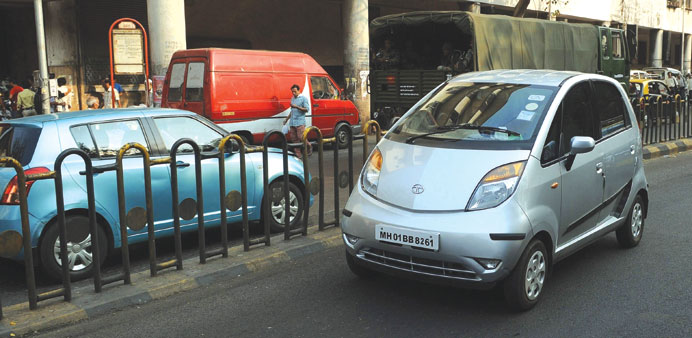
The models tested included India’s best-selling Suzuki-Maruti Alto 800, the Tata Nano, Ford Figo, Hyundai i10 and Volkswagen Polo.
Global NCAP chose the entry-level version of each model and as a result none were fitted with air bags as standard.
Combined sales of these five cars account for around 20% of all the new cars sold in India in 2013.
In the Suzuki-Maruti Alto 800, the Tata Nano and the Hyundai i10, the vehicle structures proved inadequate and collapsed to varying degrees, resulting in high risks of life-threatening injuries to the occupants, Global NCAP said.
It said the extent of the structural weaknesses in these models was such that fitting airbags would not be effective in reducing the risk of serious injury.
The Ford Figo and Volkswagen Polo had structures that remained stable and with airbags fitted, protection for the driver and front passenger would be much improved, the watchdog said. The watchdog said that coinciding with its tests, Volkswagen had decided to withdraw the non-airbag version of its Polo from sale in India.
“India is now a major global market and production centre for small cars, so it’s worrying to see levels of safety that are 20 years behind the five-star standards now common in Europe and North America,” said Max Mosley, chairman of Global NCAP.
“Poor structural integrity and the absence of airbags are putting the lives of Indian consumers at risk. They have a right to know how safe their vehicles are and to expect the same basic levels of safety as standard as customers in other part of the world,” Mosley added.
“These results show that India would benefit enormously from the introduction of minimum crash safety standards and clearer information for consumers about the protection new cars offer,” said Rohit Baluja, president of India’s Institute of Road Traffic Education.
Baluja said cars manufactured in India for export already met these standards and it was not a question of know-how or capability.
“India’s automobile industry just needs the right incentives,” Baluja added. “India can produce cars that are every bit as good as those in Europe and the US.”