


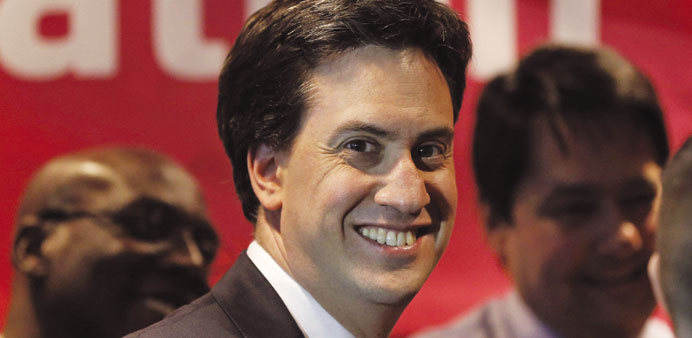
Proposals to cap the size of banks and introduce greater banking competition are set to be a central feature of a major speech by Ed Miliband tomorrow as the Labour leader moves on from the cost-of-living agenda he set at the last Labour conference.
Critics said Labour is uniquely trying to hobble state-owned RBS.
The Labour leader is under pressure after a fall in his party’s lead in YouGov and ICM polls this week. He aims to show that Labour would undertake long-term structural reforms to the economy, rather than merely ameliorate the effect of falling living standards.
Miliband wants to show that just as he took on the big six energy firms, he is willing to reform the big five banks by forcing through greater competition.
Labour distanced itself from suggestions it would impose a cap on bank size - set at a specific 25% of market share - describing the figure as wide of the mark. A 25% cap would probably only require the break-up of Royal Bank of Scotland (RBS).
But industry sources said they had been briefed that Labour would impose a cap on the number of retail branches owned by the big five banks, so forcing them to sell off some of their branches to new market entrants.
The shadow Treasury secretary, Chris Leslie, speaking on BBC Today programme said: “It is part of the old economic construct that we have this high-rolling bonus culture. We have got to move to a sustainable professional stable form of banking if we are going to earn our way out of this cost-of-living hole we are in and if we are to help the small businesses get the finances they need to build a better economy. And we have got to have more competition in the banking sector.
“We have a situation where customers feel, ‘what is the point of switching?’ It is no wonder that people stay with one bank account. Apparently you are more likely to get divorced than change bank account. We have got to give customers more choice. Fees and charges are too high and there is not enough hunger in the banks to serve customers.”
He added the government had failed to implement the Vickers commission reforms on banking. Leslie justified Labour’s plan to cap bonuses of RBS bankers at twice their annual salary, saying: “It is time to change this high-risk, high-reward bonus culture which has caused such devastation. Is the chancellor going to roll over and let these bonuses go ahead even though he owns 81% of the shares in RBS? Is he going to roll over and let the market continue?”
The Treasury said there was no proposal from RBS yet to seek to pay higher bonuses, something that requires shareholder approval. But the Treasury is opposed to the cap on bonuses imposed by the European Union.
Ross McEwan, the RBS chief executive, is currently devising his strategy for the bank, which was bailed out with £45bn of taxpayer money five years ago.