


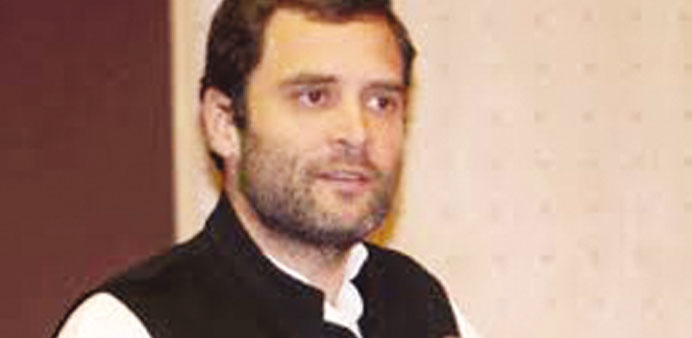
Gandhi: grim outlook
Only 14% of voters believe Congress vice president Rahul Gandhi would make the best prime minister for India, a survey found yesterday, just days after his endorsement by outgoing premier Manmohan Singh.
The survey for The Times of India found 58% of respondents want Gujarat Chief Minister Narendra Modi, the candidate of the main opposition Bharatiya Janata Party in this year’s general election, to be the next prime minister while 25% opted for the anti-corruption champion Arvind Kejriwal.
The poll makes grim reading for the ruling Congress Party, which had been hoping that the youthful Gandhi would significantly increase its apparently slim chances of victory in the election due by May.
Gandhi, 43, is expected to be named at a party meeting on January 17 as Congress’s candidate for premier after the 81-year-old Singh confirmed last Friday that he would step down after the polls.
In a rare press conference, Singh said that Gandhi has “outstanding credentials” to lead the world’s largest democracy.
But yesterday’s survey, which was conducted among voters in India’s eight largest cities, highlighted the media-shy bachelor’s failure to connect with voters already dismayed by a sharp slowdown in the economy and a series of corruption scandals on Singh’s watch.
While respondents were not directly asked which party they would vote for, the survey showed that 81% of voters want Kejriwal’s fledgling Aam Aadmi Party to contest all the seats.
Kejriwal was installed as chief minister of Delhi last month after his party’s stunning showing in a state election there, in which Congress saw its number of seats fall from 43 to just eight.
Senior AAP figures have said the party would contest most of the seats at the general election although it faces a huge task to raise money and identify candidates.
The BJP is the overwhelming favourite to win most seats. Modi was chosen last September as its candidate for prime minister.
No party is expected however to win a majority in the parliament, with regional factions likely to hold the balance of power.