


|
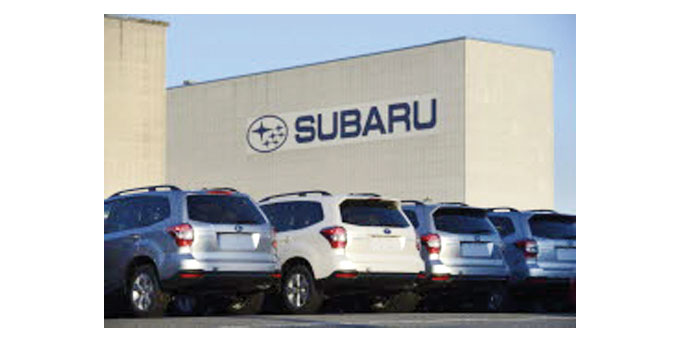
Subaru, the auto unit of Fuji Heavy Industries Ltd, added the most US market share of any foreign carmaker last year as the brand long known for quirky all-wheel- drive vehicles continued to win more mass-market fans. |
A revamped Forester crossover and new XV Crosstrek wagon helped boost annual US sales for the unit of Tokyo-based Fuji 26%, matching 2012’s gain and ending 2013 with a record 424,683 deliveries. Subaru’s market share rose 0.4 percentage point to 2.7%, an improvement topped only by Ford Motor Co’s 0.45 point increase, according to Autodata Corp.
“Subaru is still somewhat out of the mainstream, but they’re at that crossroad where they have to decide which direction they want to go,” said Alec Gutierrez, an analyst at Kelley Blue Book in Irvine, California. “Do they keep a kind of cult status or go further into the mainstream?”
Subaru benefited as US auto sales grew 7.6% last year to 15.6 million cars and light trucks, the most since 2007. A strengthening US economy and improving job market have led automakers and analysts to forecast further growth in auto deliveries to at least 16 million new vehicles this year.
The automaker’s sales gained 9.6% to 40,172 in December. Combined US sales of Japanese and Korean autos grew 1.2% in December and 6.6% for the year. Toyota Motor Corp, the world’s largest automaker, reported a 1.7% decline in December deliveries, less than the average estimate of a 3.1% increase from seven analysts surveyed by Bloomberg.
Honda Motor Co’s sales rose 1.9%, short of the average estimate of a 4.1% gain. For the year, Toyota reported a 7.4% increase and Tokyo-based Honda said sales rose 7.2%.
December sales for Nissan Motor Co climbed 11%, the most among the six biggest automakers in the US, while trailing the 13% average estimate. The Yokohama, Japan- based company’s deliveries rose 9.4% last year, aided by its Altima sedan and revamped Pathfinder sport-utility vehicle.
“Nissan was probably a company that didn’t get as much attention as it deserved,” Gutierrez said. “They had their best ever volume last year, their best year ever for Altima, Rogue Versa and Pathfinder — 2013 turned into a great year for Nissan.”
Subaru won’t have a third consecutive 26% volume gain in 2014, Tom Doll, president of the company’s US sales unit, said in an interview yesterday.
“Things will settle down a little,” he said. “We’re going to grow, of course, somewhere around the 8 to 10 percent range. Our goal, honestly, is to hold share.”
Gains this year will continue to come from the Forester and Crosstrek, Doll said. Annual volume may grow to as many as 460,000 vehicles, he said.
Supply constraints, with the capacity to build only about 800,000 vehicles globally, limit the company’s ability for further rapid growth, Doll said.
Subaru’s goal is to maintain a reputation for durable cars that have a different character from competing Japanese and US vehicles, said Michael McHale, a company spokesman.
Fuji Heavy Chief Executive Officer Yasuyuki Yoshinaga “has made it clear that he does not want us to become a Toyota or a Honda,” McHale said.
Toyota is Fuji Heavy’s biggest investor, with a 16.6% stake, according to data compiled by Bloomberg.
Toyota’s sales of 2.24 million Toyota, Lexus and Scion models were the most since its 2007 record year in the US.
The Camry sedan was the top-selling US car for the 12th year in a row, with sales up 0.9% to 408,484.
The Toyota City, Japan-based company’s stalwart family car is under pressure from Honda’s Accord, Nissan’s Altima and Ford’s Fusion sedan.
“Toyota is coming to terms with a more competitive landscape,” said Eric Lyman, vice president at ALG, the data company that helps determine vehicle residual values. “They didn’t have to worry about the US domestics or the Koreans for many years, and now they do. That’s particularly true for models like Camry and Corolla.”
Lexus, Toyota’s luxury line, posted a 12% gain last year to 273,847 cars and SUVs. Yet Lexus still ended up behind Bayerische Motoren Werke AG’s BMW and Daimler AG’s Mercedes-Benz in US luxury sales.
Toyota’s Prius, the world’s best-selling gasoline-electric auto, also missed the company’s full-year goal of sales of more than 240,000 units. Prius deliveries fell 1% to 234,228, hurt by a 22% plunge in December.
“We missed it by maybe a day of sales or maybe a half day of sales,” Bill Fay, group vice president of Toyota’s US sales unit, said on a conference call yesterday. “We look at it as a good solid number.”
Toyota’s 2013 US market share fell 0.1 point to 14.3%, according to Woodcliff Lake, New Jersey-based Autodata.
Honda had its second-best year in the US, delivering 1.53 million Honda and Acura vehicles. Gains for the Accord, Civic small car and CR-V crossover weren’t enough to overcome a 10% drop in sales of Acura’s premium sedans.
“The RLX and ILX are not quite delivering on expectations and TL is long in the tooth and not doing much,” Lyman said. The company’s MDX and RDX sport-utility vehicles “have been very well received, but the new MDX arrived a little too late in the year to make up for the car side.”
Tetsuo Iwamura, Honda’s executive vice president, said in an interview in December that fixing Acura’s sedan lineup has become a top priority.
The company plans to show the new TLX sedan, a replacement for the TL, at the North American International Auto Show in Detroit this month.
The Accord, Civic and CR-V each sold more than 300,000 units in the US last year. Honda also has said at least 98% of its US sales are to individual retail customers, rather than corporate or rental fleets.
“There’s a case that they are more fundamentally sound than even Toyota,” said Kevin Tynan, a Bloomberg Industries auto analyst. “It’s all retail for them. And they’ve got these three models that combined deliver about 1 million units.”
Honda’s market share was unchanged at 9.8% in 2013, according to Autodata.
Combined sales for Hyundai Motor Co and affiliate Kia Motors Corp fell 2% in December, missing the average estimate of a 7.2% increase. Deliveries rose 6% for Hyundai and fell 14% for Kia, the companies said in separate statements.
Hyundai’s full-year sales rose 2.5% to 720,783 vehicles, a record for South Korea’s largest automaker.
The results were announced a week after Seoul-based Hyundai said John Krafcik was being replaced as CEO of its US sales unit by Dave Zuchowski. The carmaker hasn’t provided details on Krafcik’s departure.