


|
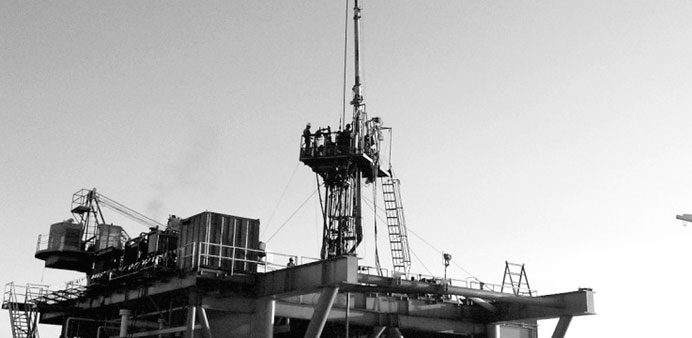
Magenta-coloured bars creep up on a monitor screen at the control room of Senipah-Peciko-South Mahakam oil terminal in Indonesia’s East Kalimantan province, indicating three storage tanks are being filled. |
“It takes more than 60 days now to fill a 500,000 barrel tank with crude from Bekapai field,” said Kristanto Hartadi, a spokesman at Total E&P Indonesie, a unit of the French oil major Total SA that operates the facility. “That compares with about 10 days when it was at full production.”
Bekapai, which pumped more than 50,000 barrels a day in 1978, now flows at just 7,000 barrels, a symbol of the decline in Indonesia’s oil and gas production. Aging fields, rising exploration costs and increased fuel demand will force Southeast Asia’s most populous nation to import 90% of the oil it needs by 2030, according to the Agency for the Assessment and Application of Technology.
Domestic consumption is the biggest factor turning the region’s largest oil producer into a net importer, said Unggul Priyanto, the deputy head of the agency known by its local acronym, BPPT. The nation withdrew from the Organisation of the Petroleum Exporting Countries in December 2008.
“Our fuel demand keeps rising while oil production declines,” Priyanto said in an interview on December 16 in Jakarta. “We’re not like Middle East countries that have big oil reserves.”
Production is forecast to drop by more than half to 124mn barrels in 2030, from 329mn in 2011, BPPT said in a report in December. Imports will rise almost four times to 532mn barrels, from 134mn, as output from maturing fields slows.
Indonesian producers will pump 804,000 barrels a day of oil this year, according to J Widjonarko, the acting head of SKK Migas, which regulates the upstream oil and gas sector. That would be the lowest output since 1969, falling short of the government’s target of 870,000 barrels.
“We’re only optimising by draining existing reserves because there aren’t any new reserves found,” Widjonarko said in Jakarta on December 30.
Only 72 of the country’s 329 working oil and gas areas are currently in production, he said. Drilling-related expenses that are reimbursed to producers by the government, known as cost recovery, increased almost fourfold to $15.98bn in the past 11 years, according to data from SKK Migas. Extracting oil and gas typically gets more expensive as fields mature and explorers tap reserves in more challenging terrain such as Papua and offshore eastern Kalimantan.
Imports of refined products are for a threefold gain to 567mn barrels in 2030, from 172mn in 2011, BPPT said in the report. Indonesia’s total fuel requirement will more than triple to 1,029mn barrels, from 399mn.
Domestic pump prices were raised in June for the first time since 2008 as the government sought to reduce subsidy costs. To boost fuel supply, a 300,000 barrel-a-day refinery will be built in Tuban, East Java, in 2018, while the Balongan plant in Cirebon is scheduled for expansion in 2025.
“When the new refineries start operations, it would cut imports of oil products, but raise crude purchases because we won’t produce much oil,” Marzan Iskandar, the head of BPPT, said in a separate interview.
Indonesia’s status as a leading exporter of liquefied natural gas is also diminishing. The nation, which shipped more LNG than any country for about three decades until 2006 when it was overtaken by Qatar, currently ranks third globally.
The country will sell 10% of its total gas output to overseas markets by 2030, down from 46% in 2011, according to BPPT. LNG imports to meet local demand will climb to 642bn cubic feet, accounting for almost half of the country’s total gas supply, it predicted. State-owned oil and gas company PT Pertamina last month signed a 20-year contract with Houston-based Cheniere Energy Inc in Indonesia’s first LNG import deal.