


|
|
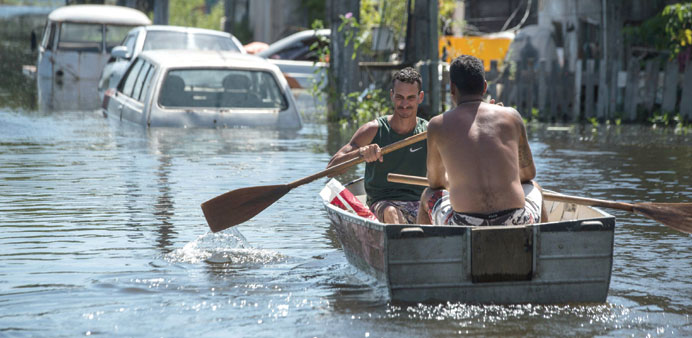
President Dilma Rousseff on Friday vowed to improve warning systems after touring flood-hit areas of southeast Brazil where 44 people have died following torrential rains.
After two weeks of heavy downpours which have triggered deadly landslides, the weather is beginning to improve across much of the region.
“We are very concerned about these floods and landslides in two Brazilian states, Minas Gerais and Espirito Santo,” Rousseff told reporters after her helicopter tour of the city of Governador Valadares in Minas Gerais.
She said alert systems were very important to prevent fatalities.
“At times we succeed (in preventing deaths), very often we failed. But we are going to fight to make sure we do,” Rousseff, who was accompanied by several ministers and local authorities, added.
She pointed to the creation in 2012 of an “electronic disaster map” which enables mayors and governors to bypass the bureaucracy and use federal funds to lend assistance to cities facing emergencies.
Since it was set up, the system had allocated $300mn in emergency aid.
Residents of Governador Valadares blocked a major highway on Thursday night demanding the federal government offer more help in the wake of the destruction.
On Tuesday, Rousseff pledged millions of dollars in federal aid to help rebuild the area.
Civil Defence officials meanwhile said two children aged 3 and 11 died on Sunday buried under mud slides that swept away their home in Governador Valadares, where rivers overflowed their banks, causing extensive flooding.
Tens of thousands of people spent Christmas without drinking water, power or communications while food shortages were reported.
In neighbouring Espirito Santo which has been hit by the worst rains in 90 years and which Rousseff toured on Tuesday, the official death toll was revised downward from 27 to 23.
Two persons are still reported missing and presumed to be buried under the mud.
A total of 52 cities in Espirito Santo have been hit by flooding and 61,000 people have been evacuated.
The sun came out on Friday in Vitoria, the state capital of Espirito Santo for the first time since December 10.
The military is taking advantage of the break in the weather to deliver aid by helicopter.
Seven thousand people are believed to be cut off in the municipality of Baixo Guandu in the Doce river valley alone.
Flooding is common in southeast Brazil during the rainy season.
In 2011, more than 800 people were killed in floods in what officials said was the worst natural disaster ever to befall Brazil.