


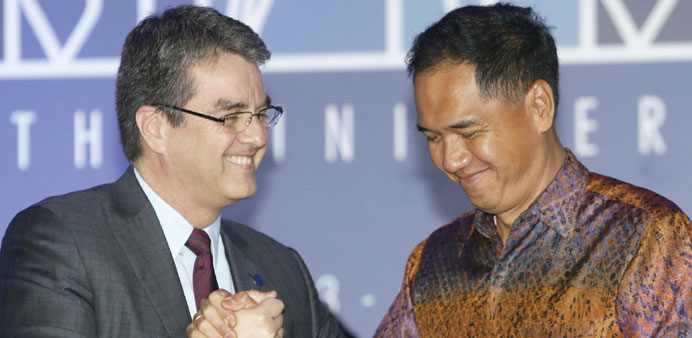
Roberto Azevedo (left), WTO director general; and Indonesian Trade Minister Gita Wirjawan shake hands during a closing ceremony of the Ninth WTO Ministerial Conference in Nusa Dua, Bali, Indonesia yesterday. Success in reaching an agreement that supporters say could add $1tn to the world economy may help extend talks on the Doha trade negotiations, which have dragged on for 12 years.
Bloomberg
Jakarta
The World Trade Organisation agreed to the first major accord in the group’s 18-year history, a pact designed to smooth commerce at borders and safeguard food security programmes in developing nations.
The deal unveiled yesterday in Bali, Indonesia, was the first multilateral agreement negotiated by the WTO’s 159 member nations. It emerged from talks that had continued through the night after the US and India compromised on food subsidies and a Latin American bloc led by Cuba dropped its earlier opposition to a draft agreement.
“For first time in our history, the WTO has truly delivered,” said WTO Director-General Roberto Azevedo. “We have put the world back into the World Trade Organisation.”
Success in reaching an agreement that supporters say could add $1tn to the world economy may help extend talks on the Doha trade negotiations, which have dragged on for 12 years. A deal at Bali had looked unlikely earlier this week.
India wanted a pact that would satisfy its demands to exempt food security plans from being counted under subsidy spending caps, while the US was concerned that surplus from India’s food programme may get dumped onto world markets.
The agreement lets India and other developing nations continue to subsidise their crops to bolster food security without having to worry about legal challenges, so long as the practice doesn’t distort trade, according to a draft text.
Indonesian Trade Minister Gita Wirjawan told ministers at a conference yesterday that the accord will provide more certainty to business.
“These countries will benefit from increased access to markets,” said Wirjawan, adding it will make it easier for the least developed countries to export goods.
The anti-poverty campaign group War on Want said the Bali talks still hadn’t resulted in universal rights to food.
The US and other members of the Geneva-based WTO would retain the right to file a complaint if subsidised goods are sold in global markets and depress prices or harm competitors.
US Trade Representative Michael Froman hailed the agreement, calling it an important step toward advancing the Doha agenda.
“The WTO has entered a new era,” Froman said in a statement. “WTO members have demonstrated that we can come together as one to set new rules that create economic opportunity and prosperity for our nations and peoples.”
The draft included provisions to cut red tape at borders, a step sought by shippers including FedEx Corp and United Parcel Service.
US business groups, including the Business Roundtable and the US Chamber of Commerce, hailed the pact. The Washington- based roundtable’s members include the chief executive officers of US companies such as Boeing Co and Microsoft Corp.
This “will provide a solid foundation to re-energise the WTO” and provide momentum to conclude other deals, Caterpillar Inc CEO Douglas Oberhelman, chairman of the roundtable’s international engagement committee, said in a statement.
Susan Ariel Aaronson, professor of international affairs who specialises in trade policy at George Washington University in Washington, said the compromise was a trade-off that keeps in place protectionist agricultural policies for the sake of the larger trading system. “You always have to buy trade liberalisation with some protectionism” at the international level, she said in a phone interview. If that allows the WTO to achieve some success in opening trade, it’s a good thing, she said.