


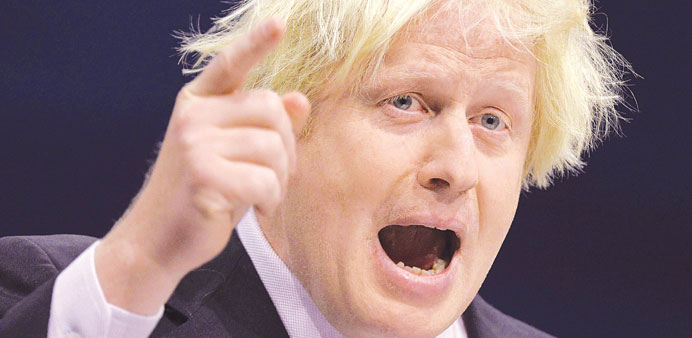
“Transport costs account for a sizeable chunk of people’s budgets, and Londoners are still feeling the pinch. So, I’ve decided it’s right to usher in a freeze on fares.”
London Evening Standard/London
Boris Johnson yesterday announced a “real terms freeze” in next year’s bus and Tube fares.
They will go up by 3.1% on average in the new year, in line with inflation, to help families who are “feeling the pinch”, he said.
The mayor chopped 1% off the expected rise of 4.1% by ordering £16bn worth of efficiency savings.
Winners include pay-as-you-go Oyster users, who will see no rise at all in peak fares at Tube and rail journeys starting or finishing outside Zone 1.
The daily “cap” on pay-as-you-go charges also stays at this year’s prices, meaning a price cut after inflation.
But single journeys within Zone 1 rise by 10p to £2.20, a 4.8% rise.
A single bus fare with Oyster goes up 5p to £1.45, while the cash fare stays at £2.40.
Weekly Travelcards jump up 4.1% overall, in line with national rail services.
A weekly Zone 1-6 card will rise 4.3% from £55.60 to £58.
The few people still paying cash on the Underground, mainly tourists, will see a single fare in Zone 1-3 rise 20p to £4.70.
The mayor told the Standard he had held down the fares by ordering cost-cutting plus more ambitious commercial targets.
“Transport costs account for a sizeable chunk of people’s budgets, and whilst the economy is now showing some very positive signs, Londoners, who’ve played a huge part in the recovery, are still feeling the pinch. So, I’ve decided it’s right to usher in a freeze on fares.”
It is the first time fares have not risen above inflation since Johnson took office. He claimed the fares would benefit “particularly part-time workers or those in search of work”.
Among the cost-cutting measures are the introduction next year of contactless payment cards eventually saving £80mn a year. Hundreds of Tube ticket offices will be scrapped next year in the teeth of union protests.
All free and concessionary travel stays for young, elderly and disabled people.
Tory Assembly member Roger Evans called for more savings at TfL, including driverless trains and reforms of “gold-plated pensions”.
The mayor’s political opponents said the move was too little, too late.
Caroline Pidgeon, leader of Liberal Democrats on the London Assembly, said: “After so many painful years of inflation-busting fare rises this is the very least the mayor should be doing to help Londoners.”
Labour’s shadow London minister Sadiq Khan said: “Despite yesterday’s reprieve, a Zone 1-6 Travelcard is still £440 a year more expensive than when Boris Johnson became mayor and a single bus journey is up by 56%.”
But Manuel Cortes, leader of the TSSA union whose members include ticket office staff, said: “We are delighted that millions of commuters will benefit from the fact that Boris and the Tories are now running scared from Labour’s attack on the cost-of-living crisis facing hard- working families.