


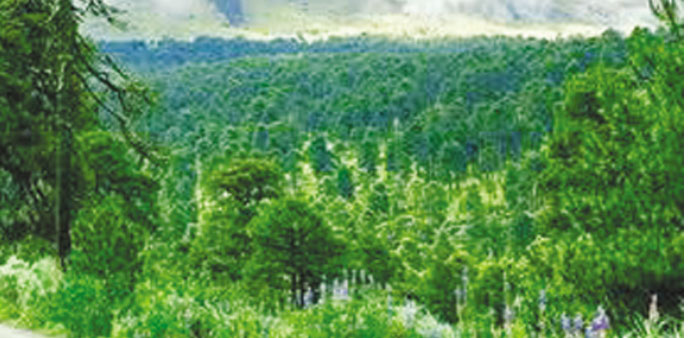
Nearly eight decades ago, president Lazaro Cardenas waxed eloquent when he created the Nevado de Toluca National Park, hailing Mexico’s fourth-highest volcano as a “true living museum of flora and fauna.”
The iconic national park lasted 77 years. Then, last month, President Enrique Pena Nieto decreed it out of existence. Nevado de Toluca is now considered a “protected area.”
Conservation officials say they had little choice. Logging and other degradation within the 208-square-mile park had become so severe that the national park designation made no sense.
Some environmental activists are livid about the change of status.
“This is an abdication by the Mexican state of maintaining the kinds of national parks that civilised countries of the world enjoy,” said Gabriel Quadri de la Torre, an environmentalist and presidential candidate in the 2012 elections. “This is a defeat. ... It’s terrible.”
Unlike national parks in many other countries, much of Mexico’s protected lands and wildlife refuges are in private or communal hands and people live in them. They plant crops, raise cattle, farm trout and occasionally hew trees for lumber.
Several factors make Nevado de Toluca stand out, not least of which is its towering 15,289-foot elevation, higher than any peak in the continental US and frequently snow-covered.
The dormant volcano has two lakes in its crater, considered the highest lakes in the western hemisphere. Alpine meadows cover its upper reaches, which are often shrouded in mist.
Coyotes, ring-tailed cats, badgers, rabbits and ferrets are among the 44 mammal species found in the pine, oyamel fir and oak forests at lower elevations.
In the late 1990s, politicians from the surrounding state of Mexico, one of 31 states in the nation, worked with a Canadian developer to float a plan for a resort with 19 ski slopes, and a 27-hole golf course. The resort would have been a two-hour drive from metropolitan Mexico City. The plan was shot down.
Some critics of the downgrading of Nevado de Toluca’s status suspect that politicians still harbour development plans. Luis Fueyo MacDonald, the head of the National Commission of Natural Protected Areas, denies that, saying the management plan for Nevado de Toluca prohibits the construction of tourist developments, ski trails, golf courses, rustic homes or cabins, hotels or other projects.
While it may seem contradictory, Fueyo said the downgrading of the volcano increased the odds that authorities could work with the farmers who live on its flanks to protect its natural wonders. He said no politician seemed ready to enforce the blunt bans called for in laws governing national parks.