


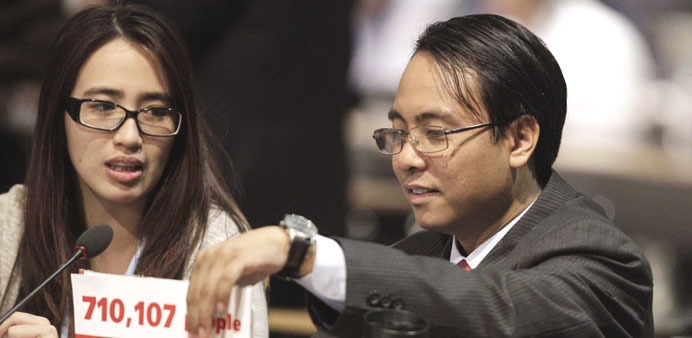
Philippine Climate Commissioner Naderev Sano holds a sign at the closing session during the 19th conference of the United Nations Framework Convention on Climate Change (COP19) in Warsaw.
AFP/Warsaw
For Philippines diplomat Naderev Yeb Sano, Saturday’s close of UN climate talks in Warsaw comes with an unusual prize: he can eat again.
The climate envoy had embarked on a tea-and-water only fast on the first day of the talks on November 11, in a symbolic push for a good outcome.
“I am famished. I am famished!” the senior climate envoy said at the Warsaw National Stadium where the discussions ended in a number of consensus agreements on Saturday.
“My doctor says I should take it slowly, so in three days I will be eating normal food.”
What will tonight’s meal be?
“Some vegetable juice,” the negotiator said, laughing.
Sano had pledged to fast until the latest round of UN talks made “meaningful” progress towards fighting the climate change he blames for Typhoon Haiyan, which ravaged his country.
“I would say, the COP (conference of parties, as these gatherings are known) did not come out with the kind of outcome I thought would have been meaningful.
“But I also said that I will be fasting for the duration of the COP. This COP is about to close so I’ll be able to eat.”
Sano’s move was also meant as a show of solidarity with his countrymen, relatives and friends left stranded and hungry after the powerful storm swept through.
The climate commissioner said he was pleased the Warsaw meeting had managed to agree on creating a “loss and damage” mechanism to deal with future harm caused by climate change events that can no longer be prevented.
The mechanism is meant to help poor and vulnerable countries deal with extreme weather events like storms, but also slow-onset damage like land-encroaching sea level rise or desertification.