


|
As US president, John F Kennedy had little political success and even made serious mistakes. Yet the Kennedy myth lives on half a century after his assassination. |
Of the many books marking the 50th anniversary of his death, the most original thesis comes from journalist Jeff Greenfield, who puts forward a breathtaking “alternate history”: Had Kennedy lived, the US would have been spared the trauma of the Vietnam War; the US and the Soviet Union would have drawn cautiously closer to each other; and the Cold War would have ended a lot earlier.
Greenfield’s ideas have serious academic backing.
“There is no doubt his assassination changed the course of American history,” historian Allan Lichtman, of the American University in Washington, told DPA. “There is now a lot of evidence that John Kennedy was seriously reconsidering America’s involvement in Vietnam.”
Kennedy, the 43-year-old who with his looks, youth and speeches inspired the hopes of the younger generation with his election in November 1960, had only been president for 1,036 days when he was felled in the Texas city.
His New Frontier legacy mobilised the ‘60s generation into politics and public service, generating the lasting myth that was sealed by his premature, tragic death. In that context, his accomplishments in office have faded to a minor detail.
At the time, the US was the land of unlimited possibility. Kennedy’s vow to put the first man on the moon became a reality on July 20, 1969.
Kennedy’s empathetic speeches resonate to this day - “Ask not what your country can do for you; ask what you can do for your country” - and have lost none of their power, despite embarrassing revelations and historical corrections.
While photos portrayed an athletic young man, Kennedy in real life suffered serious illnesses and wore a brace for chronic back pain.
Photos showed a happy husband next to the beautiful and elegant Jacqueline, and the president in the Oval Office while young son John plays underneath his desk. The fact that JFK was later exposed as a womaniser has barely scratched his image, even in the puritanical US.
Kennedy’s “Ich bin ein Berliner” declaration in Berlin in mid 1963 has become an iconic, much repeated image of any documentary about the Cold War. It far overshadows the anger and disappointment in Berlin just two years earlier, when he failed to step in against the communists building the Berlin Wall.
The often-repeated photos of the assassination show the president being shot in the head and collapsing in his open limousine. Jacqueline, wearing a pink suit, throws her body over him. Conspiracy theories persist: Why was the alleged killer, Lee Harvey Oswald, himself killed just two days later?
Critics note that JFK - the first Catholic US president — was at best half-hearted in his efforts to end racial apartheid. It took his successor, Lyndon B Johnson, who knew his way around Congress, to get Kennedy’s proposed civil rights law enacted.
In fact, Kennedy’s first year was a disaster.
Just four months into office, the April 1961 CIA-coordinated invasion of the Bay of Pigs in Cuba, intended to oust communist leader Fidel Castro, was a complete fiasco
Kennedy’s weak, inexperienced performance at a meeting with Soviet leader Nikita Khrushchev in Geneva had serious consequences and emboldened the Soviets. Two months later, the Berlin Wall went up. The next year, the Soviets started installing missiles in Cuba.
Hess said Kennedy rescued the situation with the blockade of the communist island just off Florida’s shore, which forced the Soviets to back down. But it brought the world to the brink of nuclear war and, Hess said, was really Kennedy’s fault for flubbing the encounter with Khrushchev in the first place.
Also in his first year, Kennedy sent to Vietnam several hundred military advisers, opening the door to the gloomiest military misadventure in US history.
“By any objective standards, he could not be called a great president,” historian Stephen Hess, of the Washington-based think tank Brookings Institute, told DPA. “And I think we would have a hard time even calling him a good president.”
Yet the Kennedy phenomenon has survived all that and more: he remains to this day one of the most popular presidents in US history.
“After all the revelations of his deceptions, his errors of policy and his dissipated private life, Jack Kennedy remains one of our national darlings,” says author Michael Knox Beran.
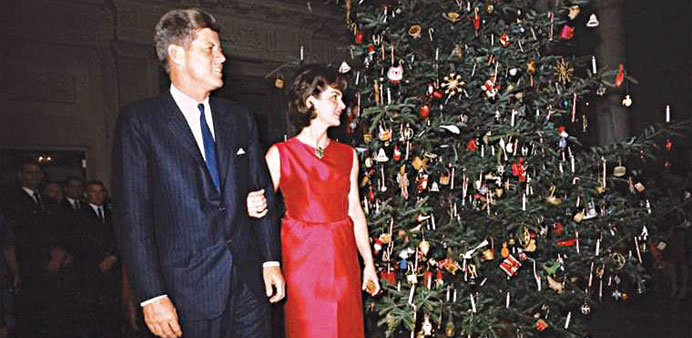
Looking back at JFK and Jacqueline Kennedy
|
The 50th anniversary of the assassination of John F Kennedy provides an opportunity to consider the shifts in consciousness in the US that have occurred in the half-century since his death. |
In particular, though Kennedy has entered the pantheon of American heroes, recent data show that women, especially, have been losing admiration for him as a leader. Why?
In some ways, Kennedy’s legacy for women was as progressive as his legacy on race and poverty. One genuinely visionary move was to ask Eleanor Roosevelt, a longtime feminist, to chair the first President’s Commission on the Status of Women (PCSW).
The PCSW, which included both male and female political leaders, was a real, rather than cosmetic, effort to assess the workplace bias that women faced, what legal protections they should have, and what could be done to end gender discrimination – a concept that did not yet even have a vocabulary.
Indeed, when Kennedy convened the PCSW, women in America could be excluded from juries and could not even secure credit in their own names.
The same year that Kennedy was killed, Betty Friedan published The Feminine Mystique, igniting a firestorm of debate about “the problem that has no name” – women’s dissatisfaction with their limited roles.
The PCSW’s report, issued a month before Kennedy’s assassination, could have been a watershed had he lived.
But, despite his progressive stance, American women’s reassessment of the 1960’s in general has not left Kennedy’s reputation unaffected.
Once an icon of heroism, personal charm and the quest to overcome longstanding injustices, Kennedy’s reputation has been badly damaged by tales and testimonials about the scores of women who cycled through White House bedrooms (or hotel rooms when the president travelled).
Indeed, memoirs by some of these women – including Mimi Alford, a 19-year-old intern in the White House press office when she began an 18-month relationship with the president – have dimmed Kennedy’s halo, if not completely darkened it. So has reporting that addresses his liaisons with Marilyn Monroe and Marlene Dietrich.
Other women, such as his self-proclaimed mistress Judith Campbell, reportedly had sexual relationships with Mafia figures as well.
The sense of entitlement that sustained such male fecklessness has been steadily eroded ever since – a process that, like so much in American culture, has played out on television. Popular series like The Good Wife show the pain and suffering of the political spouses who are expected to keep a stiff upper lip and a ladylike demeanour in the face of behavioural double standards. Similarly, the series Mad Men plumbs the emptiness and destructiveness of early-1960’s male sexual prerogative in the United States.
This reassessment of male sexual privilege and irresponsibility in the 1960’s has occurred in other arenas as well – reinforcing the transformation of Kennedy’s image from charming playboy to dangerously compulsive predator.
The authorised biography of the writer Norman Mailer – notorious for saying, as feminism began to stir, that “all women should be locked in cages” – has just appeared in the US. Mailer’s irredeemable womanising (he also married six times) comes in for a serious critical re-evaluation.
Perhaps most revealingly, while Kennedy’s aura among women has dimmed, his wife’s reputation has grown. Jacqueline Kennedy’s dignified and substantive last decade as an accomplished book editor – an icon of the modern working, even feminist, woman – has supplanted the image of her as a doll-like hostess showing TV cameras the White House, or as the archetype of the shocked, grieving widow behind a black veil.
Her deliberately constructed-for-posterity taped conversations in March 1964 with the historian Arthur Schlesinger, published in 2011, have added to her posthumous renown.
Jacqueline Kennedy’s rising star and JFK’s increasingly tarnished one – at least when it comes to his private life and the uses to which he put his personal magnetism – reflect America’s own social evolution.
The shift in Americans’ understanding of icons like the Kennedys highlights the change – I would say for the better – in Americans’ own needs, values and wishes concerning women and the relationship between the sexes.
JFK’s creation of the PCSW suggests that he saw what was coming, even as he remained very much a man of his time.- Project Syndicate
♦ Naomi Wolf is a political activist and social critic.