


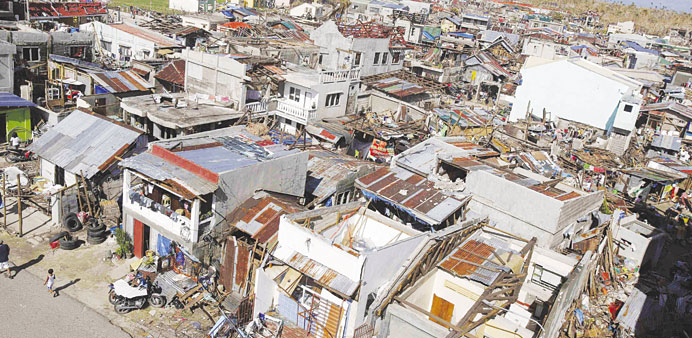
A view of the devastated town of Guiuan in the aftermath of the typhoon is pictured from a roof yesterday.
Reuters/Henani
Ten days after one of the most powerful typhoons ever recorded, some residents of remote villages in Eastern Samar province, where the storm made landfall in the central Philippines, said they were still waiting for aid.
The Philippines is facing an enormous rebuilding task from Typhoon Haiyan, which killed at least 3,974 people and left 1,186 missing, with many isolated communities yet to receive significant aid despite a massive international relief effort.
In ravaged villages along the coast of Eastern Samar, heart-breaking, hand-written banners plead for attention.
“Help us,” said one in large, silver-painted capital letters on blue plastic sheeting. “We need food.”
The storm surge that turned fields into sea in just seconds swept away dozens of flimsy timber homes in Hernani, a small community of about 200 farmers and fishermen, killing many. One family said there had been one delivery of food and water. Others said there had been none.
Ten members of the Candido family lost their home and now shelter from the sun and regular torrential rain under a plastic sheet.
“We don’t have any choice over our future,” Nestor Candido, 39, said on Monday. “All we do here is plant vegetables and harvest coconuts and now this tragedy ... It will take time to get another harvest.”
Just a few hundred metres away, all that remains of Eida Oracey’s home of 10 years is the kitchen sink and the toilet.
“It’s too hard. We don’t have shelter, clothes or food. It’s just too much,” she said.
While aid packages have begun to reach more remote areas, much of it carried by Philippines air force helicopters dating back to the Vietnam war, the UN said people were still going hungry in some mountainous provinces.
Govt to split up relief zone among aid nations
The Philippines will divide up the typhoon-ravaged central Visayas between countries to maximise relief efforts, a senior officer said.But the country is still struggling to get aid to devastated areas due to the extent of the destruction, which has left 4mn people displaced, threatening Aquino’s reforms that have helped transform the Philippines into one of Asia’s fastest-growing and hottest emerging economies. The military commander of the Visayas, Lieutenant-General Roy Deveraturda, said the relief plan was to now cut the region into blocks and decide which military forces operate where.“We’re planning to ask the British Royal Navy to concentrate on the western Visayas region to assess and deliver food, water and supplies to smaller islands... We already have the Americans in Samar and Leyte and Israeli doctors and relief teams in northern tip of Cebu,” he said. About 50 US ships and aircraft have been mobilised in the disaster zone, led by the USS George Washington aircraft carrier.