


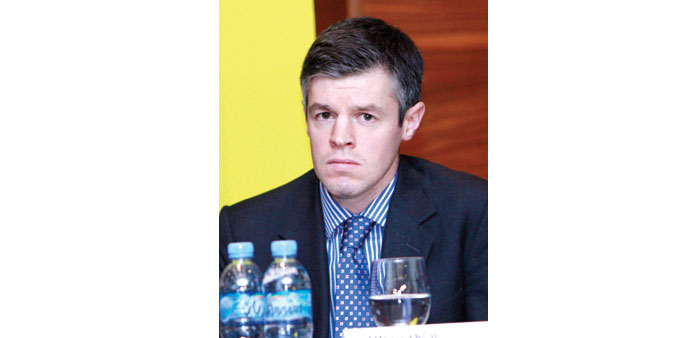
The Supreme Committee says it has been meeting with relevant stakeholders and developing a plan for addressing worker welfare since winning the World Cup bid in 2010
|
|
All the companies working on Qatar 2022 projects will be “transparently and robustly” monitored through a three-tier compliance and auditing structure, officials said yesterday.
These companies will have a “contractual obligation” to comply with the law and standards set by the Qatar 2022 Supreme Committee, it was explained in a statement released just a day after the Amnesty International issued its report titled “The Dark Side of Migration: Spotlight on Qatar’s Construction Sector Ahead of the World Cup”.
The Supreme Committee said it valued the contribution of the Amnesty International report and was pleased to see that the global human rights watchdog had acknowledged “the positive steps” it was taking to ensure contractors uphold human rights standards.
Also, it noted the Amnesty International had recognised the Supreme Committee’s commitment to transparency with regard to the development and implementation of its Workers’ Welfare Standards and also to the fact that the responsibility for the welfare of workers was shared by all parties involved in the chain of contracting, including the Qatar government, the governments of labour-exporting countries, recruitment agencies and the companies that employed them.
The Supreme Committee’s officials had met with Amnesty International representatives last Sunday to discuss conditions of labourers working on projects leading to the 2022 FIFA World Cup.
About the meeting, the committee said that a “productive discussion” had taken place, which covered a range of topics, including the progress of Workers’ Welfare Standards and the formation of a worker welfare committee.
“It was agreed at the conclusion of the meeting that a constructive dialogue between the two organisations would continue in the years leading up to the 2022 World Cup.
“The Supreme Committee has been meeting with relevant stakeholders and developing a plan for addressing worker welfare since winning the bid in 2010. In 2013, the committee released its Workers’ Charter and, at the end of this year, it will release its Workers’ Welfare Standards, aligned with Qatari law and international best practice, which set clear guidelines from recruitment to repatriation.”
Meanwhile, Amnesty International has said that it is looking forward to the outcome of a review being planned by Qatar in response to its report on the plight of construction workers.
The Ministry of Foreign Affairs, in a statement issued through the official Qatar News Agency (QNA) on Sunday, had reiterated its resolve to protect and promote human rights in the aftermath of the Amnesty International’s 169-page report. The ministry pointed out that the global law firm of DLA Piper had been assigned to conduct “a comprehensive and independent review” of the status of foreign workers in Qatar.
When approached for a comment to the Qatar government’s response to the report, James Lynch, Amnesty International’s researcher on migrant workers in the Gulf, told Gulf Times via e-mail: “We welcome the fact that the Qatari authorities are taking these findings seriously and that they will be considered as part of a review which the government states will be independent.
“Amnesty International awaits the outcome of the review and urges the Qatari government to take bold and concrete steps to ensure that workers’ rights are fully protected.” Page 3