


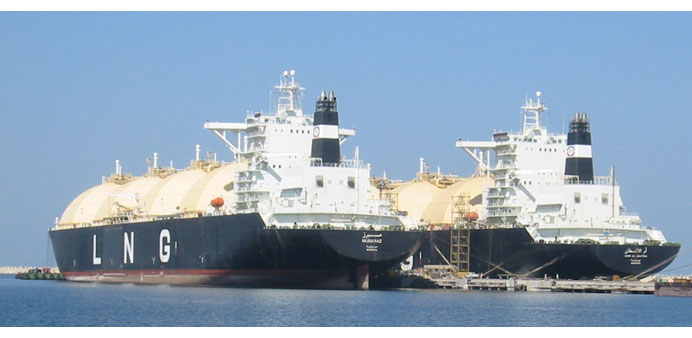
South Korea, the world’s second-largest buyer of liquefied natural gas, boosted imports of the fuel by 19% in October amid increased demand for power generation, Bloomberg reported.
Shipments climbed to 3.19mn metric tonnes from 2.68mn a year earlier, according to data on the Korea Customs Service’s website today. Imports advanced 29% from September.
Domestic sales by state-run Korea Gas Corp, the company that buys the most LNG globally, were up 18% in October from a year earlier, according to a regulatory filing on November 12. Demand from electricity producers rose by 39%, while local city-gas providers used 1.8% less of the fuel.
South Korea imports most of its LNG under long-term contracts with suppliers including Qatar, Indonesia, Malaysia and Oman. It was the largest buyer after Japan in 2012 with purchases of 36.77mn metric tonnes, according to the industry-funded International Group of Liquefied Natural Gas Importers in Paris.
South Korea paid $2.39bn for LNG in October, compared with $1.81bn in the same month last year, the data show.
The average price rose to $749.97 per tonne, from $675.62. That is equivalent to $14.42 per million British thermal units, compared with $12.99 the year before, according to Bloomberg calculations based on the customs data. The most expensive supply was from Oman, at an average $16.95 per million Btu for 307,450 tonnes. Russia delivered three cargoes at $4.37 per million Btu, the lowest paid in October.
Asian buyers typically import more spot LNG in October and November to replenish inventories before heating and power demand peaks during winter in the northern hemisphere.
South Korea purchased six spot shipments in October, according to the data. Peru, South America’s sole producer of the fuel, supplied 72,237 tonnes while Nigeria, Africa’s largest natural gas exporter, sent 304,604 tonnes. A standard LNG tanker can carry about 60,000 tonnes.