


AFP/Sucre
A study financed by the European Union shows Bolivia needs 14,705 hectares to grow enough coca for its legal use but currently has 25,300 hectares under cultivation, officials said.
“Demand is estimated at 20,690 tonnes annually and the required area is 14,705 hectares (36,337 acres),” coca growers union leader Rodolfo Machaca told reporters after a presentation to the government of the comprehensive study on coca leaf consumption.
The study, the result of an accord between the Bolivian government and the EU, was due to be made public in its entirety Tuesday but local media had still not received it by early yesterday.
Julio Salazar, a senator representing coca producers who was also at the presentation confirmed Machaca’s comments as he called for other studies to be done on topics such as “exportation and industrialisation.”
According to the UN, Bolivia has 25,300 hectares of coca plants although a law dating back to the 1980s only authorises the cultivation of 12,000 hectares for the production of coca leaves for traditional consumption in this Andean country.
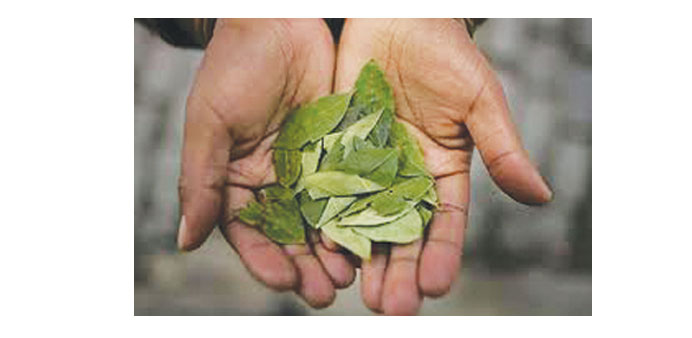
Chewing coca leaves is a centuries’ old tradition in Bolivia and it is also consumed as tea or used in religious ceremonies. However, the leaf is also the raw ingredient for cocaine, which is an important revenue source for the poor.
This year, Bolivia was readmitted to the UN’ main anti-narcotics treaty, after winning an opt-out allowing its population to keep chewing coca leaves. It withdrew from the UN Convention on Narcotic Drugs last year in protest over the coca leaf being labeled an illegal drug.
Ranked as the third global producer of coca and cocaine behind Peru and Colombia, Bolivia adopted a $50mn national plan to reduce demand of the stimulant between 2013 and 2017. At the same time, however, it is looking for opportunities to export coca leaves.