


|
|
A new electronic system launched in May at Al Wakra Hospital’s Blood Coagulation Clinic has helped reduce waiting times to just 10 minutes, thus improving the experience of patients.
Specialised in following up with cardiac patients on blood thinning medications in an effort to control risks of dangerous blood clots and bleeding, the clinic has served about 200 patients so far.
The new system is designed to electronically document patients’ data such as the medications prescribed, the recommended dosage and other health-related information.
Al Wakra Hospital Outpatient Department head and Cardiology chair Dr Ezzideen Hamza Sawali said the clinic was one of a kind in Qatar.
He said the clinic will soon be followed by a series of specialty clinics for follow up on hypertensive and diabetic patients.
“The Blood Coagulation Clinic is run by a clinical pharmacist, who works under the supervision of a specialised physician, is well versed in pharmacology and the properties of relevant pharmaceuticals and their side effects,” Dr Sawali said, adding: “They play an important role in educating patients on the proper use of blood thinners, their interactions with other medications, and the potential side effects.”
Siddiqa Ibrahim Abdulla, a patient, commended the services at the clinic as time-saving.
“I am happy that I do not have to wait for a long time to access this service and the clinical pharmacists are knowledgeable, courteous and accommodating,” Abdulla said.
South African expatriate Fayza Adams said she was impressed by the quick and efficient service she received at the clinic.
“The care I have received from the doctors and pharmacists have helped improve my health,” she said.
Al Wakra Hospital Pharmacy department head Dr Fathiya Salama said the clinic was efficient and cost effective and the idea for the service came from the US, where a similar one is being operated in Boston.
“This clinic provides patients with essential education on the safe and proper use of blood-thinning medications, in some cases reducing the need for hospitalisation,” Dr Salama said.
“We are conducting a research project, in conjunction with the Pharmacology Department at Qatar University, on the medical and psychological impact of the Blood Coagulation Clinic on patients, as well as the cost and benefit implications of such a clinic,” the doctor added.
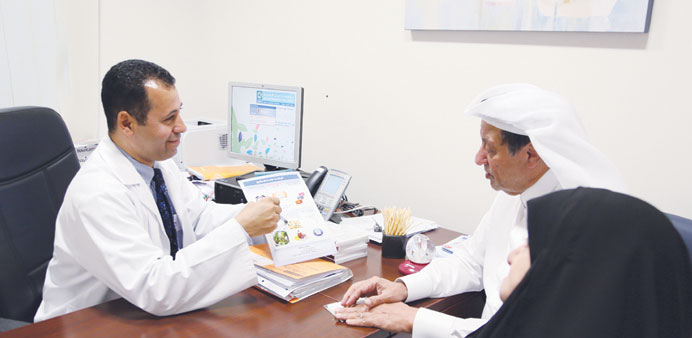
Clinical Pharmacist in charge of the Blood Coagulation Clinic, Dr Usama al-Badri, said the staff provides patients with educational materials which help to answer any questions about their medication.
“These are provided in person, via e-mail or on CD so they can refer to them at any time,” he added.