


Reuters
London
A US energy drilling boom is revolutionising the niche market for liquefied petroleum gas (LPG), bringing down global prices and challenging established exporters in the Middle East.
The changes are the latest sign of the global impact of a drilling renaissance in the US that has already hit oil and natural gas. And like oil and gas, it is US LPG producers who are set to gain the most, while established exporters may struggle with new competition in a suddenly altered landscape.
While LPG has been trading for many decades, the US production boom is now attracting big trading houses on a larger scale.
“We are very involved in LPG, and we’ve taken substantial long-term positions,” Ian Taylor, president and CEO of energy and commodities trading major Vitol Group told Reuters in an interview yesterday. LPG is an easier growth market than other booming energy sectors such as liquefied natural gas, he added.
Unconventional oil and gas drilling, including shale gas extraction from fracking, is controversial because it requires large amounts of water and chemicals to be pumped at high pressure into the earth, and some countries such as France and Bulgaria have banned the technology.
In the US, development of shale resources has resulted in a sharp increase in production, turning it from a large energy importer into an oil and gas exporter.
In the LPG market — mostly the use of butane and propane in household devices but increasingly also in transport — analysts say that North America will vie with the Middle East as the world’s top supply region this year and in 2014 at average daily production rates of around 2mn barrels per day (bpd).
US shipments are expected to bring down global LPG prices as top Middle Eastern suppliers such as Saudi Arabia and Qatar have to adjust to their new low-priced competitors.
“The stars are aligned for increased US LPG exports to Asia,” US energy researchers ESAI Energy said in a research note in October.
“Of the anticipated US LPG surplus of nearly 350,000bpd by 2015, about 110,000 bpd could reach Asian markets. This game-changing development will redraw global LPG trade flows and force Middle Eastern LPG exporters to lower prices,” ESAI Energy said, adding that Saudi contract prices would fall from over $70 a barrel now to $68 per barrel in 2014 and to $65 in 2015.
Although US propane production from shale gas has been rising for a while, a lack of export infrastructure has kept most at home, pulling US prices well below international levels. But high global prices have attracted investment and US export capacity is now rising fast.
Texas-based Enterprise Products announced early in October it would build a 6mn barrel a month LPG export terminal. Last week, Phillips 66 also said it would develop a $1bn LPG export terminal at Freeport, Texas, with a capacity of 4.4mn barrels per month.
“We are looking at a rapidly changing energy landscape that presents excellent opportunities,” said Tim Taylor, executive vice president at Phillips 66.
“There are attractive markets outside of the US for products like butane and propane,” he added.
US LPG exports averaged around 148,000bpd in 2011 and rose to 196,000bpd last year, while exports were already up to an average of 280,000bpd in the first seven months of 2013.
Canada, the traditional supplier of LPG to the US, is also considering building an export terminal to serve Asia, further undermining the Middle East’s market dominance in this sector.
Analysts say the US LPG export boom will be further aided by the expansion of the Panama Canal, allowing the passage of so-called very large gas carriers (VLGC) from 2015 and reducing the cost of freight by cutting the sailing time from the US to Asia by over two weeks.
“A good fundamental outlook (for) the next three years mainly due to more US exports has led to more interest in (VLGC) tonnage,” Norwegian brokerage Pareto Securities said in a research note in October.
Although the main focus of US LPG exports will be Asia, some analysts say that the lower freight rates US exporters need to pay to ship LPG to Europe will mean that Europe and Asia will begin to compete for American supplies.
“The high cost of freight to Asian destinations means that the European arbitrage route is more attractive from a logistical point of view and this lends support to our view that US LPG volumes will largely remain within the Atlantic Basin over the coming years,” researchers at JBC Energy said in a market report.
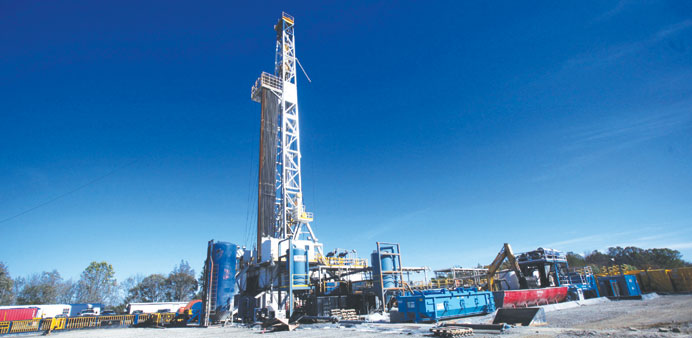
The shale gas boom hitting Ohio and other states is driving energy and electricity prices down, making the US a more attractive place to produce goods