


Guardian News Service
Colombo
|
|
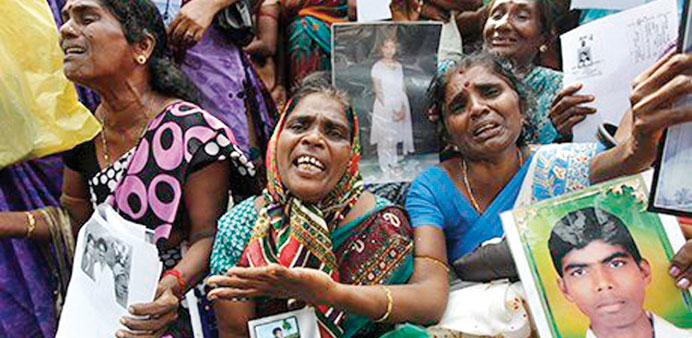
Relatives of the victims of abductions blamed on Sri Lankan authorities have called on British Prime Minister David Cameron and other western leaders to meet them during the Commonwealth heads of government meeting in Colombo later month.
“Sri Lanka is not worthy of this summit but I ask the leaders who come here to meet us too, the relatives of the disappeared,” Sandhya Eknaligoda, 50, said.
Eknaligoda’s husband, Prageeth, was picked up by unidentified men in an unmarked van near the newspaper offices where he worked in January 2010. As a journalist, campaigner and cartoonist whose drawings mocked Sri Lankan politicians, Prageeth, 53, had enemies. “He was afraid. Only a fool would not have been. But he believed in what he was
doing,” Eknaligoda said.
Legal documents filed by the Sri Lankan government in Colombo describe Prageeth as having been “abducted by an organised group”. Human rights activists believe he is one of many critics of President Mahinda Rajapakse abducted in recent years. “Nobody can give the numbers. Those who disappear are often not reported by their families,” said J C Weliamuna, a human rights lawyer in Colombo.
The Sri Lankan government denies any involvement in such kidnappings. In an interview in September with Al Jazeera, Rajapakse dismissed the charges as “nonsense”. The government has set up a commission to investigate forced disappearances, but only those occurring during the 25-year civil war, which ended in 2009. Few in Colombo doubt that the Commonwealth summit will bolster Rajapakse, who remains popular among the Sinhalese majority. The president is still acclaimed by many Sri Lankans for ending the conflict between the Liberation Tigers of Tamil Eelam (LTTE) and government forces - though resentment simmers in the Tamil-
dominated north.
In interviews in Colombo and the northern town of Jaffna, activists described incidents ranging from intimidation to violent attacks. “I am under constant surveillance. They are tracking my movements, questioning my neighbours. Any person, they get threatened,” said one trade unionist. Many more have been advised by government contacts that they are “angering powerful people”.
Journalists have been targets. Prageeth had been held by police overnight as “a warning” four months before he disappeared. Estimates of how many have been killed range from five to 14 since 2006.
In January 2009, the editor-in-chief of the Sunday Leader, a newspaper often critical of the government, was shot dead. In a letter to be published in the event of his murder, he blamed the
government.
Officials from the defence ministry, run by Rajapakse’s brother, Gotabhaya, have said many abductions since the end of the conflict were of “underworld characters involved in organised crime, drug trade,
extortion, kidnapping”.
Only the Canadian prime minister, Stephen Harper, has said he will boycott the Commonwealth meeting. Cameron has said he will raise “those aspects of the human rights record in Sri Lanka that we are not
happy with”.
But Ruki Fernando, of the Rights Now Collective for Democracy, said: “It is naive to think you can talk about human rights with the Sri Lankan government and change anything.”