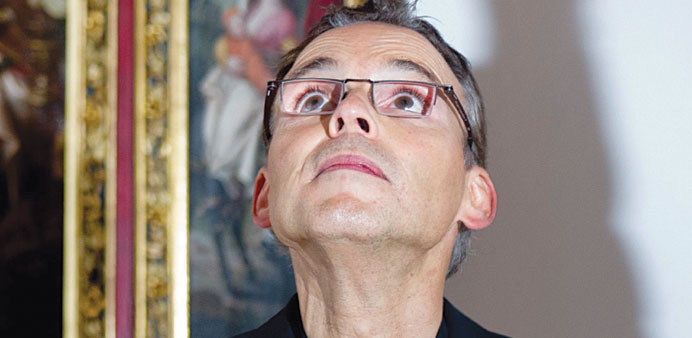
A December 2012 file picture shows Franz-Peter Tebartz-van Elst, the bishop of Limburg, looking up as directed by an aide (shadow seen in the background) while posing in the chapel on the grounds of the Old Vicariate opposite of the cathedral in Limburg, Germany.
DPA/Reuters/Vatican City
The Vatican has sent a German bishop, who came under fire for spending tens of millions of euros to build a lavish official residence, on a sabbatical for an unspecified time.
Franz-Peter Tebartz-van Elst’s extravagant spending as bishop of Limburg had attracted unfavourable comparisons with the relatively humble, no-frills style that Pope Francis has brought to the Vatican.
The 53-year-old bishop, whose Limburg diocese includes Frankfurt, had discussed the crisis in an audience with Francis two days earlier.
“The Holy See thinks it is appropriate to allow (the bishop) to spend time outside his diocese” until an enquiry set up by the German Bishops’ Conference releases its findings, a Vatican statement said.
The statement said Tebartz-van Elst “is not able to exercise his bishop’s duties at the present time” because of the “situation” in the Limburg diocese.
The Pope’s decision on the fate of Tebartz-van Elst was unusual because it appeared to leave him in limbo, falling somewhere between a suspension and an outright dismissal.
Last week, the Pontiff met the head of the German Bishops’ Conference, Archbishop Robert Zollitsch, to discuss the case of the so-called “bling bishop”.
According to German media reports, the residence and office complex that Tebartz-van Elst commissioned may cost up to 40mn euros ($55mn), nearly eight times the initially disclosed estimate of 5.5mn.
The renovated complex in the shadow of Limburg cathedral includes a 15,000-euro bathtub. Internal documents show the total construction cost is 31mn, and legal liability for land subsidence may cost millions more.
Tebartz-van Elst has apologised for any “carelessness or misjudgment on my part”, but denies wrongdoing.
He has also been accused by German magistrates of lying under oath about a first-class flight to visit poverty programmes in India.
Guenther Geis, the dean of Limburg cathedral, who has clashed with the bishop over spending, said at a news conference that the bishop had lost credibility.
“It is a crisis of confidence that will be difficult to end,” he said, with other members of the cathedral chapter at his side.
While the Vatican did not say what would happen if the enquiry exonerated Tebartz-van Elst, Helmut Wanka, the diocesan chief of personnel, said it was not customary in the church to send clergy back into conflict, but to give them new jobs elsewhere.
Tebartz-van Elst, at 53, is 22 years away from official retirement age in the church.
Even if he eventually steps down from the diocese of Limburg, he would retain the title and rank of bishop, meaning the Vatican would have to find another post for Tebartz-van Elstsomewhere.
The Vatican has appointed Wolfgang Roesch, a senior priest, to deputise for Tebartz-van Elst in the diocese.
It retired the bishop’s current deputy, Franz Kaspar, 75, with immediate effect.
Christian Weisner, leader of a liberal Catholic group, Wir Sind Kirche, said that Francis had been merciful and it was appropriate that the Pontiff should wait for the result of the investigation before taking any final decisions.