


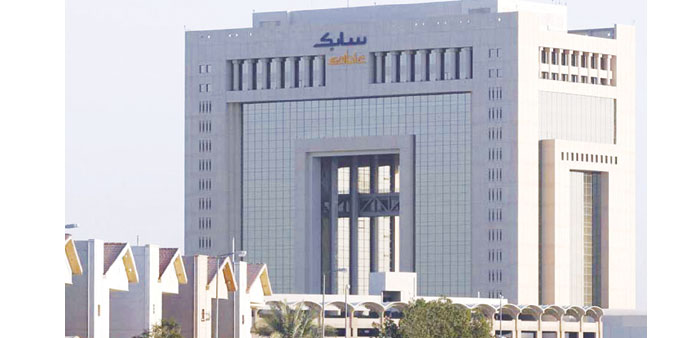
Demand for Sabic’s October 2018 security exceeded supply as investors seek opportunities in the kingdom, the world’s biggest crude exporter
Bloomberg/Dubai
Saudi Basic Industries Corp’s bond yields are close to a record low as investors seek to buy into Saudi Arabia’s oil-driven economic growth.
The yield on petrochemical maker Sabic’s November 2015 dollar notes was at 1.37% on October 3, within 12 basis points of the lowest level since the company sold them in October 2010, according to data compiled by Bloomberg. The premium over two- year Treasuries widened to 105 basis points, from 92 basis points on September 23, when the spread reached its all-time low before Sabic sold an additional $1bn in five-year debt.
Demand for Sabic’s October 2018 security exceeded supply as investors seek opportunities in the kingdom, the world’s biggest crude exporter. The Gulf nation, which has no sovereign bonds, is expanding capacity to refine crude and produce chemicals to wean the economy away from relying on oil sales. Growth is forecast at 4.2% this year, almost triple the US rate, a median of 20 estimates compiled by Bloomberg show.
“The company doesn’t have parallels in the region,” Farjad Tanveer, a Dubai-based money markets dealer at Mashreq Bank, said by telephone on October 1. As a diversified manufacturer backed by the government, Sabic can weather weakness in its core business, he said. “It’s a unique way to get exposure to the Saudi market.”
Sabic’s credit default swaps, or contracts insuring the company’s debt against default for five years, are near a record low, having fallen 35 basis points in the last 12 months to 86. They bottomed out at 84 on May 22.
“Investors are most likely substituting the new issue for the older one, as many institutional investors have credit exposure limits to a single name,” Yaser Abushaban, executive director of asset management at Emirates Investment Bank, said on October 2 by e-mail.
Some bond-holders also prefer the company’s newer, higher-yielding notes, Abushaban said. Sabic, the largest publicly traded company in Saudi Arabia, is owned 76% by the government.
The 2018 bond it sold in the last week of September is the only conventional, corporate dollar-denominated bond issued by a Saudi borrower in at least 21 months, according to data compiled by Bloomberg. Companies have otherwise sold Islamic bonds, or sukuk.
Saudi Arabian Oil Co, the state-owned crude producer known as Saudi Aramco, sold sukuk through two joint ventures to finance chemical and refining projects. Aramco and Total last month exported the first fuel from a jointly owned plant financed in part by a $1bn sukuk. Sadara Chemical Co, an Aramco venture with Dow Chemical Co, raised $2bn from sukuk this year.
Sadara, which will produce 3mn metric tonnes of chemicals a year after reaching full capacity in 2016, will wait until it begins production before tapping debt markets, Ziad al-Labban, the company’s chief executive officer, said at a conference in Manama on September 30.
Borrowers in the six-nation Gulf Cooperation Council rely mostly on bank loans or government financing, Yahya Alyahya, chief executive officer of Gulf International Bank, said at the same conference on September 30. Saudi Arabia is the largest of the GCC economies.
Sabic is rated A1 at Moody’s Investors Service and A+ at Standard & Poor’s and Fitch, the fifth-highest investment-grade ratings at all three agencies.