


Around 250 healthcare professionals from HMC’s colorectal surgery unit shared experiences at the second Colorectal Surgical Symposium held at corporation’s Education Centre.
The symposium featured presentations from experts in laparoscopic colorectal surgery including Germany-based University Hospital Regensburg’s Prof
Ayman al-Agha.
Several local speakers from HMC’s colorectal surgery unit also participated in the symposium, including the unit head and colorectal laparoscopic surgery consultant Dr Mohamed Abu Nada, Dr Ayman Abdulhafiez, consultants Dr Ahmad Hashim and Dr Muhamad Kareer; specialists Dr Rasha Fouad, Dr Salwa Ahmad, Dr Muhamad Yousuf and Dr Sayed Ali.
The scientific programme of the visiting experts included a number of surgeries involving complicated cases and delivering scientific lectures on the most recent international practices in the field of
colorectal surgeries.
The programme also provided lectures and training workshops for medical staff at HMC’s surgery department, including surgeons and nurses.
Moreover, various surgeries conducted by visiting experts were displayed during the symposium through a live surgery transmission from the operating theatre to the medical education auditorium at Education Centre.
“I visit HMC three times a year. My first visit was in 2009. During each visit, I perform a number of complicated surgeries together with the participation of HMC surgeons. During this visit I have performed six laparoscopic surgeries. Moreover, I have presented the outcome of some important surgeries we performed in Germany,” Prof Agha said.
Speaking on colorectal cancer and its treatment through surgical intervention, he explained that early screening and removal of masses through laparoscopic procedures protects the patient from developing a case with malignant tumors.
The information obtained from the process of early detection of invisible blood in the stool, coupled with the laparoscopic procedures, may be essential for the prevention of
colorectal cancer.
“The most important medical discoveries revealed that colorectal tumors usually start with minor masses of benign tissues and then they begin to grow until they eventually become cancerous tumors,” Prof Agha said.
Also speaking, Dr Abu Nada cautioned that symptoms of colon cancer are similar to symptoms of other diseases.
He recommended a laparoscopic colon screening at age 50 and urged those with a family history of the disease to be screened at age 40.
“When tumors are discovered, we take a sample of these tissues and cross-sectional images to analyse them and identify the type of the tumor and the extent of its spread,” Dr Nada said, adding: “Early detection enables us to remove the benign tumors and prevent any formation of cancerous tumors. Unlike the tumors that are discovered in late stage, where recovery rates are 50%, the percentage of full recovery in early detected cases could reach 95%, which is considered as a great result that should enable the patient to return back to his normal life and engage in his daily activities.”
He noted that in addition to the genetic factor, the high consumption of proteins and fats, as well as unhealthy habits such as smoking and excessive consumption of alcohol may result in colon and rectal cancers.
Dr Abu Nada advised people to eat fiber-rich and cellulose-rich fruits and vegetables. He added that regular practice of sports could significantly reduce the risk of developing colon and rectal cancers.
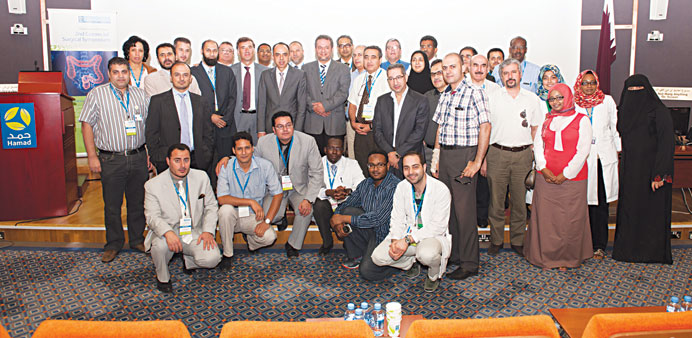
Participants after a workshop held at HMC’s Education Centre.