


By Noimot Olayiwola/Staff Reporter
A majority of children suffering from spina bifida in Qatar are not attending school because their parents worry about their safety and full integration, Hamad Medical Corporation’s (HMC) Spina Bifida Clinic Rehabilitation Services director Dr Haitham El-Bashir said yesterday.
He was presenting data from the centre on the incidence of spina bifida in Qatar during the International Conference on Spina Bifida:Genetic-Environmental Causes, Prevention and Treatment, which was hosted by Weill Cornell Medical College in Qatar (WCMC-Q) in association with HMC and Sidra Medical and Research Centre.
Spina bifida is a developmental congenital disorder caused by the incomplete closing of the embryonic neural tube.
Neural Tube Defects (NTDs), primarily spina bifida and anencephaly, are major developmental disorders with a worldwide prevalence of one in 1,000 live births, which translates into 140,000 new cases annually.
While its main causes remain unknown, evidence has shown that certain vitamin deficiency is the single largest factor that could lead to the disorder in any woman, who is able to get pregnant, with the risk increasing 5-10 times in those who had a parent or sibling diagnosed with the condition.
A study conducted with mothers who had prior spina bifida births indicates that the incidence of spina bifida can be decreased by up to 70% when the mother takes daily folic acid supplements prior to conception.
The condition accounts for 4.7/10,000 among all deliveries in the country between 2006 and 2011.
Infants with spina bifida often survive and face a life challenged by paralysis and a variety of urological and neurological complications.
Physical signs of spina bifida may include leg weakness and paralysis; orthopaedic abnormalities (club foot, hip dislocation, scoliosis); bladder and bowel control problems such as incontinence, urinary tract infections and poor renal function; pressure sores and skin irritation; and abnormal eye movement
According to Dr El-Bashir, who stressed the need for such children to attend school, there are a total of 102 kids aged zero to four years currently undergoing rehabilitation at the centre.
Some 93% of the children have NTDs and 7% other types. “Some of the children are having the condition due to spinal cord injury, fusion, lumbar and sacral as well as thoracic lesions. Some 33% of them can walk, some can walk with assistance, while the rest can either crawl or have to be in a wheelchair,” he mentioned.
The centre receives children suffering from the condition aged up to 14 years, putting the mean age (in the centre) at 8.3 years.
The children include 59% females and 41% males, while 63% are Qataris and 37% non-Qataris - mostly Indians and Africans. “Some of these children need to go to school because only 16.4% of them have cognitive delay and none of them has hearing impairment,” he said.
He lamented that many parents refuse to send children to school due to concerns over their safety. “A majority of the parents is reluctant to send the children to school as they fear that the kids may not fare well, especially with their need of intermittent catheterisation, which many school nurses may not have the knowledge of or be willing to do,” he said.
Catheterisation allows a patient’s urine to drain freely from the bladder for collection.
Dr El-Bashir also observed that some schools do not have the appropriate infrastructure to enable to children attend, adding to parents’ concerns. “Besides specialist schools, other mainstream schools here need to be sure that their structures and facilities meet the needs of the children, some of whom are wheelchair-bound. They also need to provide reassurance to parents that their wards are safe in their care,” he noted.
However, while claiming that the incidence of spina bifida in Qatar is low compared to elsewhere in the world, the official stressed the need for active surveillance on the condition in the country besides calling for more aggressive campaigns in preventing its complications.
“We realised that many of the parents had children with spina bifida because they failed to use folic acid. However, they claim to be following a folic acid-fortified diet,” said Dr El-Bashir. “There is a need for more research into the disorder to see if there are environmental risk factors causing spina bifida in Qatar and in the region, in view of major construction works going on across the region.”
Meanwhile, seen on the sidelines of the conference was wheelchair-bound Ashish Ashok (16), who was born with spina bifida and is currently studying in Ideal Indian School here. “I do not feel discriminated against at school and am able to easily navigate around the school,” said Ashish, who plans to pursue business studies in
a university.
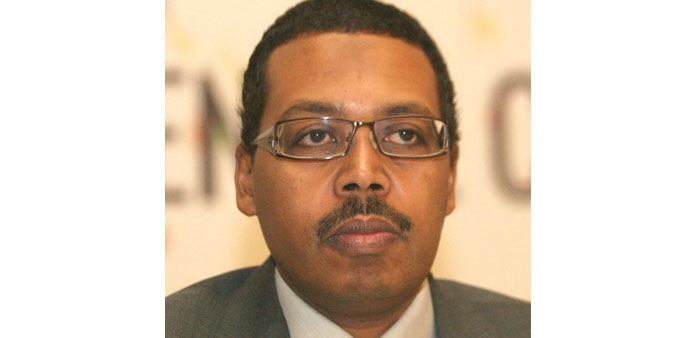
Dr Haitham El-Bashir