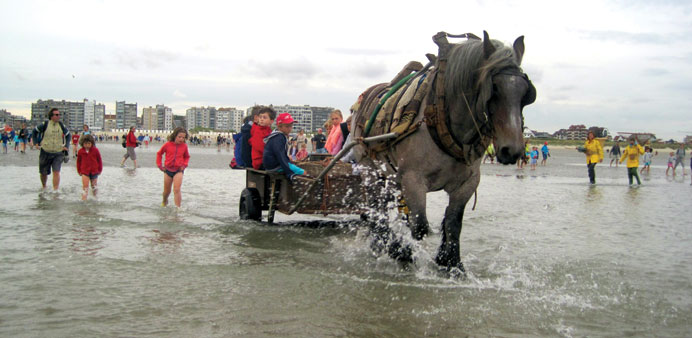
A draft horse hauls a shrimp-fishing cart along with some tourist hangers-on into the English Channel off Oostduinkerke.
By Martina Herzog
Since the 17th century or earlier, shrimp fishermen from Oostduinkerke, Belgium have been charging into the waves on powerful draft-horses, towing a contraption made of planks and a net in their wake.
“Level-headed and willing to work” are the two most important attributes of a sturdy horse which must be prepared to wade breast-deep into water in order to do its master’s bidding, said Marius Dugardein. That calls for “blind faith” on both sides, said the seasoned 68-year-old. After four decades as a regular fisherman, he swapped his boat for the saddle.
Trawling for shrimp with a horse requires both the planks and the net. The pieces of wood being dragged across the sand alarm the shrimps, which wriggle upwards and land unwittingly in the mesh of the net.
The equine fishermen break in their horses gently. The beasts are less nervous about standing in the water than they are about the unpredictable roar of crashing waves and the chatter of moving water. This unusual activity has a long tradition in the Belgian coastal town, one of the last places where “Paardenvissers,” as the fishermen on horseback are known in the Flemish language, are still active.
With a little luck they may soon find themselves on the Unesco world cultural heritage list. The bond between horse and man becomes strong and “we often like our horses more than we do our women,” said Dugardein with a grin.
The hooved powerhouses, which each weigh the equivalent of a small car, are paragons of calm. By the time they find themselves trotting across the beach among hundreds of holidaymakers they know the ropes well.
Children whine, cameras click and like their steeds the fishermen are used to being at the centre of attention. A fishing session can last up to three hours but if paying tourists come along for the ride, this is usually cut back to 60 minutes.
Horse and rider generally harvest around 8kg of shrimps per session and provided they achieve this tally the fishermen are happy, said Yvonne Koenig who works for the local tourist office in Koksijde district to which Oostduinkerke belongs.
Foraging for shrimps on horseback only works properly when the tide is out, said 18-year-old Yoshi Delancker, the youngest of the 12 regularly active fishermen. The tasty crustaceans do not relish being left high and dry and so they tend to congregate farther out.
When the water level is low they are still reachable. The main season is between February and May and from September to November. To please the tourists the mounted fishermen do venture into the waves in the summertime. The town council rewards this with a subsidy and the free use of pastureland for the horses.
A stone figure of a carthorse shrimp fisherman is a popular symbol of Oostduinkerke and it all helps to reel in the tourists. There are various stone tributes to the fisherfolk too on the beachfront and a large bush which has been clipped into the familiar shape by a local topiary expert.
Koenig and her colleagues from the tourism office and fisheries museum are now pinning their hopes on the centuries-old tradition being recognised by Unesco. The Belgians have spent years honing their application to perfection and a decision from the UN officials is due to be made when the appropriate committee comes together in December in Baku in Azerbaijan.
Horseback fishing was once a common sight on the coast of many western European countries — for centuries it was lucrative seasonal job for locals who happened to have a horse at their disposal.
“It was always about maximising returns,” said Koenig. The same principle seems to apply today — fisherman Debruyne for instance works full-time making towels at a local textile factory.
The fishermen prepare the crustaceans for open-air consumption using a huge saucepan perched on an elderly stove within full view of the sea and numerous onlookers.
“You need water, salt and a touch of something else — that’s the fisherman’s secret,” said Eddy D’Hulster, at 70 years of age he is the most senior shrimp fisher hereabouts. “If you ask me, the magic ingredient is plenty of tender loving care.”
Women traditionally do not mount horses in search of shrimps but they do drag their nets through the waves by hand. Just like they did when the men used to spend half a year catching fish off Iceland. The skills of fishing on horseback are handed down through the generations. “It’s something that a father usually shows his son how to do,” said Koenig.
Bernard Debruyne, a relaxed 50-year-old with grey bristles who regularly takes Jorka, a muscular Brabant shire horse, into the waves said, “You have to love the sea and you have to love horses.”
He is confident of finding new recruits. “My second son has already got his own horse. I don’t see any problems there,” he said. — DPA