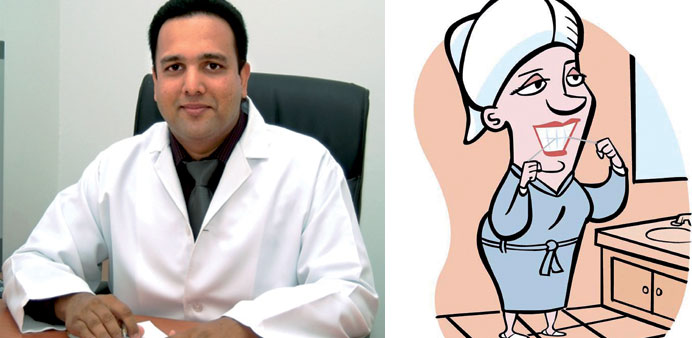
* Dr Pradeep Unnikrishnan is a specialist–dentist at Aster Medical Centre, C- Ring Road, Doha
By Dr Pradeep Unnikrishnan
According to studies, white teeth can make you look five years younger and even get you a job; White teeth can make you look 20% more attractive; Men are more worried about having bad teeth than going bald.
We subconsciously connect a dull smile with age —enamel wears over time, darkening our teeth. Even in personal relationships bad breath and yellow teeth are top turn-offs, beating bad grooming and bad hair.
Natural teeth whitening (do it yourself)
Baking soda: Using a mixture of baking soda and vinegar to remove stains from teeth is common practice. Baking soda is a mild abrasive that effectively removes surface stains from your teeth and makes them appear whiter. Do not use baking soda more than few times a month as frequent use will damage the enamel that coats your teeth. If you have braces don’t brush with baking soda, it will soften the glue that holds the braces to the teeth.
Activated charcoal is highly absorptive, which means it attracts substances to its surface like a magnet. It’s used in some tooth re-mineralisation formulas.
Lemon juice and strawberries: Brushing your teeth with lemon juice or rubbing the lemon peel across your teeth is a common whitening method and it’s also one of the worst! The citric acid in the juice erodes the enamel of calcium, causing teeth to decay much faster. Brushing your teeth with strawberries may taste good, but it is as harmful as brushing with lemon juice. The acid creates tiny holes in your teeth making the teeth more prone to staining.
Hydrogen Peroxide: Using hydrogen peroxide as a mouth rinse after regular brushing is a popular practice. Over-the-counter peroxide is not as concentrated as the peroxide in teeth whiteners, and longtime use can irritate gums and cause tooth sensitivity.
Oil pulling: It’s a traditional Indian folk remedy that involves gently gargling oil in the mouth. Commonly used oils are sesame oil, coconut oil, olive oil and sunflower oil. While scientific evidence is lacking to support any systemic benefits of oil pulling, some studies have suggested that it may reduce oral plaque, halitosis, and gingivitis. The mouth is rinsed with approximately one tablespoon of oil for 15–20 minutes on an empty stomach, the oil is then spit out and the mouth washed with water.
Dentist approved ways
to whiten teeth naturally
Schedule a cleaning: The dental hygienist will remove the pellicle, a natural film that forms on top of your teeth, temporarily making them cleaner and brighter.
Drink water: Especially after you morning cup of coffee. Coffee particles stick to the biofilm of your teeth until your next meal, staining the surfaces and penetrating the dentin over time. But refrain from brushing soon after drinking an acidic beverage as this can actually wear down your enamel.
Have an apple a day: It helps keep the dentist away too. Crunchy foods, including apples and carrots, act like little toothbrushes when you chew them. Follow up on your healthy snack with a glass of water to rinse away the sugar, acid and any plaque it may have removed from your enamel. And healthy greens such as spinach, broccoli, and lettuce contain mineral compounds that form a film over the teeth, so pigments from other foods won’t stain them.
Don’t brush your teeth: Avoid brushing your teeth right after you drink a soda or other acidic beverage or immediately following meals. Your teeth are softer right after meals because of dietary acids and bacterial acids, combined with the abrasive action of brushing this can erode your tooth enamel, abrade exposed dentin and open sensitive pores on exposed roots. Wait at least 30 minutes following meals to brush. Sip water or chew gum to activate acid neutralising saliva then brush your teeth.
Limit mealtimes, control snacking: All carbohydrates break down into simple sugars, which are ultimately converted by bacteria in the mouth into plaque that is the primary trigger of gum disease and cavities. Foods that are chewy and sticky get caught between teeth or under the gum line, where bacteria accumulate leading to decay and staining. When you eat a larger amount of food, at mealtimes, you produce more saliva, which helps wash food particles away.
Drink tea: Green teas contain polyphenols, antioxidant plant compounds that prevent plaque from adhering to your teeth and help reduce your chances of developing cavities and gum disease. Tea also inhibits the growth of the bacteria that cause odour. Many teas also contain fluoride, which helps protect tooth enamel from decay and promotes healthy teeth.
Sip with a straw: Sipping acidic drinks through a straw limits their con tact with your teeth and helps preserve the enamel.
Boost calcium consumption: About 99% of the calcium in your body is in your bones and teeth. Dietary calcium available in foods like cheese, milk, and yogurt strengthens the alveolar bone in the jaw, which helps hold your teeth in place.
Invest in an electric toothbrush: They use a scrubbing motion to remove stains.
Swim smarter: Dental researchers have found that excessively chlorinated pool water can erode and stain tooth enamel. Use a fluoride rinse immediately after using pool.
Use make up smarter: Use blue based red and pink lipsticks or clothes in dark colours to make your teeth seem whiter. Autumn colours will bring out the yellow in your teeth.
Professional bleaching procedures
Whitening toothpastes have been criticised for containing abrasive particles which can wear tooth enamel away. Whitening toothpastes remove stain particles and are far less abrasive than they once were, some contain hydrogen peroxide, but it is so weak and unstable by the time you use it, the effect is often minimal.
Home-use bleaching kits: Bleaching procedures both in-office and take-home types however, can be very effective and fears over their safety have been largely dispelled. Each technique can make teeth up to 11 shades lighter. The main difference is that home bleaching takes up to two weeks, whereas a laser treatment takes around 30 minutes. There is little evidence to support the concern that hydrogen peroxide demineralises teeth, making them weaker.
Laser tooth whitening, in which a hydrogen peroxide solution painted onto a patient’s teeth, is subjected to a strong light that speeds up the lightening process. This procedure, taking between 15 minutes and one hour, claims to lighten teeth by up to 11 shades. These techniques all target stain particles from food and drink which get trapped in the surface layers of tooth enamel.
Can whitening harm teeth?
Over bleaching can damage tissues and wear away tooth material, constant application of whitening strips have been shown to cause erosion of enamel over time to the point where your teeth will become translucent and unnatural and turn blue or grey, resulting in tooth sensitivity, especially with eating hot and cold liquids and foods. It can even kill the tooth if not used according to instructions. Whitening strips should be used in moderation. Teeth bleaching products should only be used under the guidance of your dentist.
Sensitive teeth after bleaching
Sensitivity is common with in-office whitening procedures. The sensitivity usually lasts for 24 to 48 hours. If sensitivity persists past that time there could have been underlying conditions that may have been triggered. Teeth whitening systems lift protective mineral layer and increase the porousness of our teeth making your teeth more vulnerable to acids during this time. This temporarily exposes the tooth’s nerves, which increases the sensitivity of the teeth. Taking a painkiller ahead of time may prevent the sensitivity from surfacing. As with all whitening treatments, you can’t eat or drink anything deeply pigmented, such as berries, soy sauce, red wine, or coffee, for at least 48 hours.
How to relieve sensitive teeth after whitening
* Brush your teeth before whitening not after whitening.
* Avoid hot or cold foods and drinks.
* Avoid acidic foods and drinks.
* Use a desensitising gel prior to whitening.
* Rinse out your mouth thoroughly after bleaching with water.
* Apply calcium based desensitising pastes.