


 |
|
|
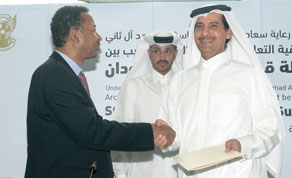
Relations between the governments of Qatar and Sudan took an important step forward yesterday with the signing of an archaeology fieldwork co-operation agreement.
The signing ceremony took place at the Museum of Islamic Art in the presence of Qatar Museums Authority vice chairperson and project committee head, Sheikh Hassan Bin Mohamed bin Ali al-Thani, project CEO Abdullah al-Najjar, and Sudan presidential advisor Dr Mustafa Othman Ismail.
Qatar’s co-operation with Sudan began with a visit by Qatar Museums Authority chairperson, HE Sheikha Mayassa bint Hamad bin Khalifa al-Thani, to Sudan in February last year, accompanied by Sheikh Hassan and al-Najjar.
They visited a number of archeological sites at Al Naqa’a, and Al Masurat as well as cemeteries and royal temples in the Al Bajrawiyah area in addition to museums in the Shendi region and River Nile state.
The delegation also participated in two workshops in Khartoum and Doha. The joint Qatari-Sudanese project is managed by Qatar, while Sudan will look to its implementation.
“Today, we begin a project on the development of the archaeology in Sudan, especially in the north, which we hope will bring prosperity to the people of Darfur,” said Dr Ismail.
“Tourism is very important to our country, which contains the largest stretch of the Nile within its borders, and the project will undoubtedly lead to an improvement in our economy. We look forward to close cooperation with Qatari universities and exhibitions in Qatar to show the people here what has been discovered.”
He claimed that ancient Egyptian pharaonic civilisation actually had its origins in Sudan and that is an aspect that has never been thoroughly investigated till now. Small pyramids dotted the landscape in northern Sudan and these would form part of the studies.
Sheikh Hassan said that until now Sudan had had relatively few archaeological excavations compared to other countries in the region and the project would give the country’s archaeology, especially in the northern areas, the prominence it deserves.
The initial co-operation agreement would last for five years and would see no fewer than 28 archaeological teams working in the field. The agreement might be extended to seven years if things went well.
Al-Najjar, who will shortly be moving to Sudan, said: “This joint archaeology fieldwork cooperation agreement is the culmination of the vigorous efforts that were exerted by both the Qatari and Sudanese governments which enjoy excellent relations in various fields, including politics, economy, and culture.”