


By Clarissa Batino /Bloomberg
Kim Henares began carrying a gun eight months after becoming the Philippines’ chief tax collector.
Her shooting instructor was the country’s president.
Since she took over the century-old Bureau of Internal Revenue three years ago, Henares has attacked one of the most common forms of corruption in the country: Not paying taxes. She’s filed more than 180 tax-evasion complaints, investigated former world boxing champion Manny Pacquiao and boosted collection by 14.5% in 2012 — more than double that year’s economic growth rate.
“I didn’t take this job to become popular,” said Henares, 53, who has a master’s degree in law from Georgetown University in Washington and often carries a semi-automatic pistol. “My job is to implement the tax code and collect revenue that must be collected. If people don’t like me, that’s fine.”
Henares is among a coterie of senior women officials at the forefront of President Benigno Aquino’s crusade to erase a Philippine legacy of graft, famously illustrated by the shoe collection of former first lady, Imelda Marcos. Reversing decades of bribery and tax evasion would yield funds for public works that can spur growth to a target of as much as 8.5% by 2016, as the government seeks to create jobs and lift millions from poverty.
Appointed by Aquino in 2010, Henares is pursuing every leak: from doctors and politicians who declare less income than they make to previously untaxed earnings at casinos and banks.
Her tenacity has helped the Philippines claw back some of the $10bn — 4% of gross domestic product — that the government estimates is unpaid every year.
“She’s the first commissioner of the bureau who dared to not be popular, who dared to rock the boat to pursue what is right,” said Emmanuel Bonoan, chief operating officer at KPMG’s local partner in Manila and a former undersecretary in the Department of Finance.
“A lot of people liked it before, when there was a lot of ambiguity. Under Kim, there’s less ambiguity, so there’s less wiggle room.”
Henares is in her element at the tax office, having worked with Bonoan on a finance department campaign against tax evaders while she was deputy commissioner from 2003 to 2005. She had been a tax and corporate lawyer, legal and compliance head at ING Groep NV (INGA)’s Philippine unit and governor of the nation’s board of investments before joining the revenue agency during Gloria Arroyo’s presidency.
Her first government stint put her in touch with Mar Roxas, the then trade secretary who later ran for vice president in Aquino’s bid for the top job. Henares was made head of a team that helped draft the presidential campaign platform, including the anti-corruption pledge.
By then, Henares had spent several years working for the World Bank group and chalked up a three-month stint in Afghanistan as consultant to the Afghan government’s large taxpayer unit. Aquino, born the same year as Henares, asked her if she would head the internal revenue bureau months before he won the election, the tax chief said in a July 25 interview.
Their collaboration is bearing fruit, with the Philippines winning its first investment grade ratings from Standard & Poor’s and Fitch Ratings this year, while Moody’s Investors Service placed it on review in July for an upgrade. Philippine local-currency bonds have returned 6.6% this year, the most among 10 Asian markets outside Japan tracked by HSBC Holdings Plc. The peso has climbed about 4% against the dollar since Aquino’s term started in mid-2010.
Few escape the scrutiny of Henares and her team. The daughter of a luxury-watch businessman, she looks for potential tax evaders in the society pages of newspapers and magazines. “If you’re ready to flaunt it, then you must have paid taxes on it,” she said.
Calling herself an introvert who hates public speaking and socialising, Henares has been shown on television wearing a T-shirt sporting her bureau’s 2012 slogan: “I love Philippines. I pay taxes.”
The eldest of four children, Henares got an early exposure to the business world. Her father, a Filipino-Chinese who married a Taiwanese immigrant, distributed Rado, Tissot and Citizen watches in Manila and had his daughter help keep the books at the age of 12. While Henares wanted to be a doctor and once wanted to join the military, her mother persuaded her to study law.
Henares’s zeal to set things right extends to the home, where she keeps three dogs and enjoys taking on the handy work, including plumbing and carpentry. She helps her husband restore vintage cars and recalls trying to put together a personal computer, often searching the Internet for instructions.
There’s plenty left to fix. The Philippines’ tax revenue-to-GDP ratio was 12.3% in 2011, among the lowest globally and below that of neighbouring Malaysia and Thailand, according to World Bank data. “Henares has done a commendable job in increasing revenue,” said Christian De Guzman, a sovereign analyst at Moody’s in Singapore, citing improvements in tax administration. “Much work remains to be done. Philippine fiscal revenues as measured against GDP continues to be low as compared to countries with similar sovereign ratings.”
Aquino got into office on the promise that “if there’s no corruption, there’s no poverty.” His mother, Corazon, became the first female Philippine president in 1986 after a People Power movement ousted Ferdinand Marcos, whose wife left behind more than a thousand pairs of shoes at the presidential palace in a symbol of the graft that festered under his rule.
Henares is a crucial part of the campaign, along with the nation’s first female chief justice, Maria Lourdes Sereno, 53, Justice Secretary Leila de Lima, 54, Ombudsman Conchita Carpio-Morales, 72, and Commission on Audit Chairman Grace Pulido-Tan. Three of Henares’ four deputy commissioners also are women.
Carpio-Morales, de Lima and Pulido-Tan are part of the Inter-Agency Anti-Graft Coordinating Council, which Aquino tasked this month with investigating and prosecuting lawmakers who misuse their discretionary budgets. About 60,000 people protested in Manila yesterday after a government audit uncovered the abuse of funds used to finance social and public works projects in lawmakers’ local districts from 2007 to 2009.
Aquino, a crack shot, trained Henares and de Lima to shoot, the tax chief said. Aware of the threats Henares was likely to face, Aquino assigned her four presidential guards; she joins the president on target-shooting practice almost every week.
Henares says she favours an SVI Infinity gun that uses a .40 calibre bullet. She is a better shot than her bodyguards, according to one of her aides. Her efforts have sparked widespread media coverage and debate in the country, where gun attacks are common.
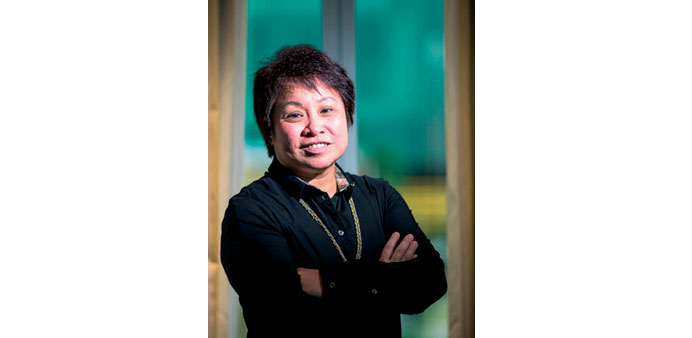
Henares: crusade against graft