


AFP/Mumbai
A young photographer gang-raped in Mumbai last week in an attack that sparked outrage has been discharged from hospital, staff said yesterday.
The 22-year-old woman was assaulted while she was on assignment for a magazine in central Mumbai with a male colleague, who was also tied up and beaten, police say.
The woman was admitted to the city’s Jaslok Hospital with internal and external injuries after the attack last Thursday evening.
“She was discharged,” a hospital official said, adding that she was now at home.
Also yesterday police took the five arrested suspects in the case to the crime scene at an abandoned mill compound for a reconstruction of events.
Police arrested them within three days of the incident that shocked Mumbai, which has long been considered one of the safer cities for women.
The case had stark parallels with the fatal gang-rape in December of a 23-year-old student in New Delhi, which ignited nationwide protests and led to a toughening of the law against rape.
The family of the photographer in Mumbai released a statement at the weekend saying they were “optimistic” their daughter’s case would be fast-tracked and the “severest of punishments” would be imposed on those responsible.
In the wake of the attack, Mumbai Police Commissioner Satyapal Singh sparked anger by suggesting that city residents need to choose between a “promiscuous culture” that allows public kissing, or a city made safe by “moral policing.”
“On the one hand you want to have a promiscuous culture and on the other hand you want a safe and secure environment for the people,” he said on Tuesday.
During a phone-in for viewers over safety concerns, Singh told the NDTV news channel that a “balance” was needed and that people were “confused” over the kind of society they wanted.
Mumbai police have come under fire in recent times for so-called “moral policing,” such as raiding bars and restaurants to enforce outdated regulations on drinking and entertainment.
Police in and around the city have also faced criticism for targeting unmarried couples or single women out late instead of potential sexual predators.
In May, the city’s municipal council proposed banning lingerie-clad mannequin dummies in shops and markets for fear they could encourage sex crime.
“I don’t understand the media and these so-called activists. They start criticising the police on moral policing. Should we do moral policing or immoral policing? I think choice is yours,” Singh said.
The Mid Day newspaper chided the “faux pas” yesterday, with the headline: “And this man’s job is to protect us!”
The police chief’s comments also angered Mumbai residents on Twitter.
“How will Mumbai’s women be ever safe with a regressive patriarch like Satyapal Singh as Chief of Police?” asked one user.
“It’s the police’s job to ensure a safe/secure environment for people - promiscuity is irrelevant,” said another.
Sex crimes have continued across India despite the national outrage and protests sparked by the fatal gang-rape of the woman in New Delhi in December.
The following month, Singh suggested that there is a higher rate of crime against women in countries which included sex education in their curriculum, such as the US.
Best-selling novelist Chetan Bhagat was also slammed on social media sites yesterday after tweeting that the country’s plunging currency had been “raped.”
Twitter users slammed the former investment banker for the tweet - in which Bhagat said: “The rupee is asking, is there no punishment for my rapists?” - accusing him of trivialising a grave problem.
“Making a fun of a serious offence rather an inhuman act & comparing with downfall of Rupee is NOT AT ALL funny,” wrote one user.
India’s online news portal Firstpost told the novelist bluntly in a prominently displayed article: “Chetan Bhagat, rape jokes are just not funny,” adding they are “tasteless and just plain crass.”
Bhagat swiftly deleted his tweet as the uproar grew, calling it “harmless” and saying he had referred to rape as a “metaphor” for the rupee’s troubles.
“As all of you hunt for that (deleted) tweet realise that your economy is in a deep crisis. And do consider raising your voice about it,” Bhagat tweeted later.
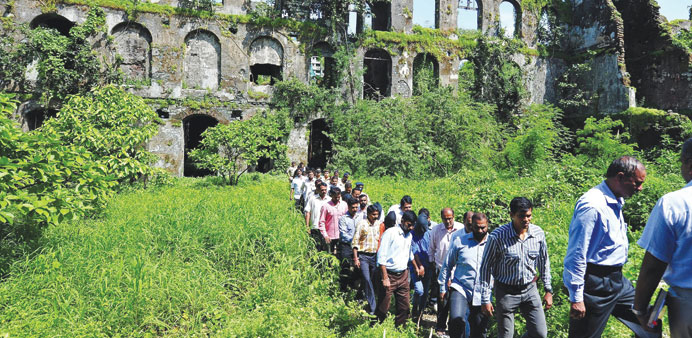
Policemen escort suspects, their heads covered in black hoods, as they exit the Shakti Mills compound, the scene of last week’s gang-rape of a female