


By Noimot Olayiwola/Staff Reporter

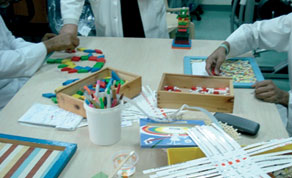
An art therapy session
Due to cultural differences as well as the stress and rigours of their work, a number of domestic workers, especially Asian housemaids (kadama) in Qatar are being sent for therapeutic treatment at the Hamad Medical Corporation’s psychiatry department, Gulf Times has learnt.
“We receive between 12-15 patients daily at the Occupational Therapy (OT) clinic, with the majority being housemaids, who due to several reasons are being brought here by their sponsors for stress and anger management therapy,” Psychiatry Department’s occupational therapist Meheinaaz Hussain said in an interview.
Occupational therapy (OT) is a holistic healthcare profession that aims to promote health by enabling individuals to perform meaningful and purposeful activities across the lifespan
She also said that a handful of the domestic workers, mostly aged between 22-30 years, were also being treated for a mental illness called anxiety disorders, which she said was leading some of them to attempt suicide or run away from their sponsors’ home.
“We have seen cases of housemaids, who were indulging in suicide attempts, and who were brought to us either by their sponsors or agents. They want us to check them after which we administer many treatment techniques such as coping skills,” she mentioned.
Hussain explained that based on the interactions with the patients, it was usually discovered that some of them were having mental problems due to the differences in their culture and that of Qatar, and that many also suffered shock on getting to know their nature of jobs, which she said many claimed were not fully disclosed to them when they were being hired.
“As some of these domestic helps have only been told that they are coming to Qatar to babysit whereas on getting here, they discover that their duties also include household chores and other menial jobs, they tend to develop psychological problems and begin to have mental fits,” she explained.
Other issues leading to mental illness among the workers according to Hussain were homesickness and change of environment.
“Majority of these domestic staff are coming from open countries where they enjoy some freedom, whereas the case is different here in Qatar, which is a closed society where you don’t see as many people on the streets as you see in some other countries. So, this is also having some psychological problems on them,” she said.
Other therapies being applied to help stabilise the patients include art therapy, which she said was the core of the treatment at the clinic.
“We try to use arts to bring out the positive energy in those patients, who show interest in bead works by asking them to create something new on their own, making use of a motley of colourful beads and other materials,” she said.
Patients are also taught embroidery with beads, painting, cooking and gardening.
“We believe that all these treatment techniques are therapeutic and they will help improve the situation of the patients. The females usually enjoy the cooking session once a week where we teach them how to cook and at the same time impacting on them a life-long skill,” she explained.
Some with auditory (hearing) problems were also being assisted by making them listen to solemn reading of the Quran and other useful audio by wearing head sets.
Other treatment plans include ensuring patients are fully independent and can take care of themselves including carrying out basic daily activities such as taking a bath, grooming and other personal hygiene.
“After we finish administering all these skills to the patients, we realised that they feel confident and more willing to continue their lives knowing that they have some useful skills they can fall back on later in life,” she maintained.
However, some of the challenges limiting the OT work according to Hussain are lack of support and co-operation of some of the sponsors or agents; inability to accept that the person is mentally sick, need medication and OT assistance.
“We are hoping that some of these challenges will be removed as we are intensifying efforts to create more awareness about the need for OT as part of mental health plan and we are planning to draw more attention to the profession during the upcoming ‘World Mental Health Day’ in October,” she mentioned.
Apart from maids, other patients seeking the help of the OT include residents in need of money management and sleep hygiene, Hussain said.
There are presently five male and female therapists and one technician working at the male and female Occupational Therapy units at the psychiatry department.