


AFP/Central Africa
Former rebel leader Michel Djotodia was sworn in as president of the Central African Republic yesterday, five months after seizing power in the violence-wracked country.
The former French colony’s sixth president is tasked with restoring security in the impoverished state and steering the nation through a transition period leading to fresh polls within 18 months.
Djotodia swore the oath of office on the Transition Charter, which has substituted for the constitution since the ouster of Francois Bozize, who himself came to power on the back of a military coup in 2003.
He vowed “to preserve the peace, to consolidate national unity (and) to ensure the well-being of the Central African people” before members of the Constitutional Court.
After ousting Bozize from power, Djotodia’s Seleka rebel alliance won de facto recognition from the international community and a shot at steering the nation through the transition period leading to fresh polls.
Five months on however, the picture is bleak, with reports of widespread rape, child soldier recruitment and weapons proliferation prompting UN chief Ban Ki-moon to say the country needed the world’s “urgent attention”.
Djotodia vowed to combat insecurity in an address marking the nation’s 53rd anniversary of independence from France last Tuesday.
An African peacekeeping force has begun deploying in the capital Bangui, which seems to be stabilising, even though gunfire could be heard overnight.
But no peacekeepers in the force that will eventually number 2,500 soldiers and 1,000 police officers are stationed outside of the capital, and people in the vast, lawless countryside live in a “permanent climate of fear”, according to the UN.
A UN report said that Djotodia’s Seleka fighters, many of whom have not been paid in months, were to blame for much of the chaos and that the group’s hierarchy is doing little to stop them.
It listed “arbitrary arrests and detention, sexual violence against women and children, torture, rape, targeted killings, recruitment of child soldiers and attacks, committed by uncontrolled Seleka elements and unidentified armed groups throughout the country.”
The International Federation for Human Rights said in July it had documented at least 400 murders by Seleka-affiliated groups since March. Bar a few arrests in Bangui, all those killings have gone unpunished.
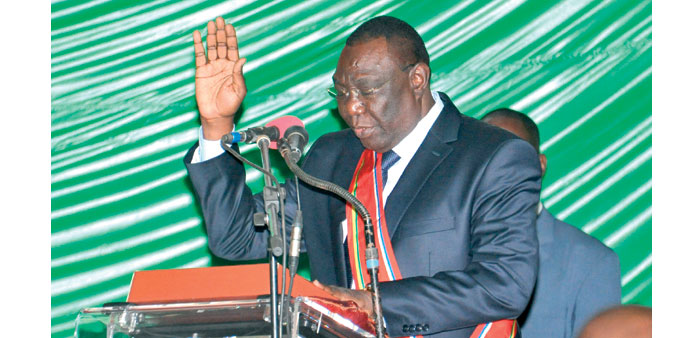
Michel Djotodia was sworn in as president of the Central African Republic yesterday.