


DPA/Belgrade
Serbian Premier Ivica Dacic said yesterday that he has sacked finance and economy minister Mladjan Dinkic and kicked Dinkic’s United Regions of Serbia (URS) out of the ruling coalition.
“I have decided that Mladjan Dinkic will not be the minister of economy and finance,” Dacic said after marathon talks among coalition partners, which touched upon the country’s deep economic crisis.
“URS is no more a part of the governing coalition,” said Dacic.
The move came though Dinkic said that URS was willing to meet all demands from senior partners in an ongoing cabinet reconstruction.
It was not immediately clear whether the rump coalition, now with a razor-thin margin, will continue.
The largest partner in the alliance, Deputy Premier Aleksandar Vucic’s Serbian Progressive Party (SNS) is set to decide the fate of the cabinet today.
Dacic said that reforms which Serbia needs to put in place in order to emerge from a deep economic crisis required somebody other than Dinkic, who has had a hand in economic governing since 2000, either as a central bank governor or a minister.
“Someone new needs to handle the key economy and finance,” said Dacic, the head of the second-largest bloc in parliament, led by his Socialist Party (SPS).
SNS and SPS now hold 128 of the 250 votes, only two above the minimum majority.
The SNS will announce its reaction to Dacic’s move when the party leadership meets today, one of its officials, Zoran Babic, told Beta news agency.
According to Dacic, if Vucic turns down his proposal to expel URS, the Socialists will leave the coalition.
SNS could then either forge a new alliance or go for snap elections, he said.
“If SNS turn that down, snap elections or a coalition without SPS are the only possibilities,” he said.
Already crippled by a decade of wars and international sanctions, Serbia was hit hard by the global financial crisis.
Its economy shrank 3% in 2009, then moderately recovered in the subsequent two years, only to decline again by 1.7% in 2012.
Politicians have shied away from unpopular reforms needed to address structural weaknesses, unsustainable spending and high deficit levels, and unemployment at 30%.
Vucic has said that he opposes snap polls – even though he and his party vastly dominate the popularity surveys – because he wants Serbia to continue reforming and secure the start of EU membership talks.
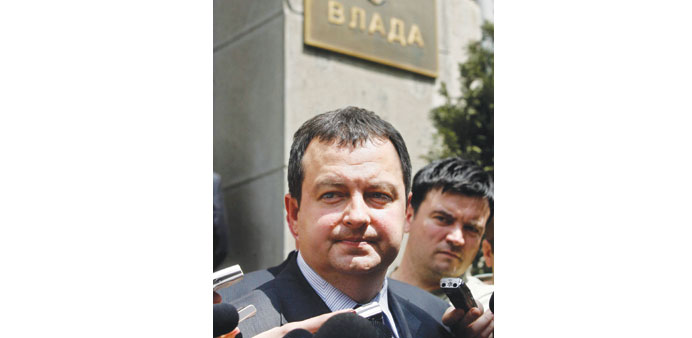
Dacic: reforms needed.