


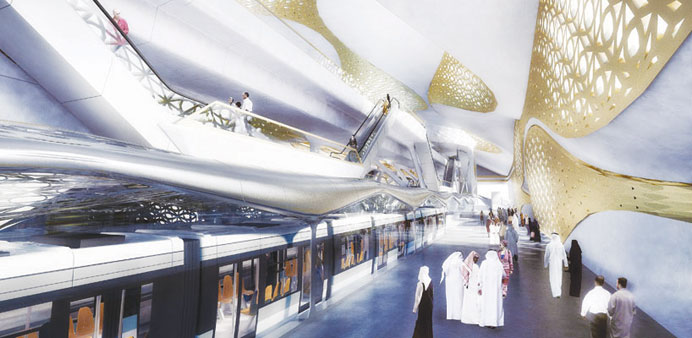
A computer-generated image of the Riyadh Metro project. The 85-station network will be the longest metro in the world under construction and will create 15,000 jobs over five years, according to FCC, which led a consortium that won a contract for three lines.
Bloomberg/Dubai
|
|
Saudi Arabia awarded more than $22bn in contracts to develop a metro line in Riyadh as the world’s biggest oil exporter joins Dubai and Qatar in expanding transport networks.
The kingdom gave Bechtel Group a $9.4bn contract, Fomento de Construcciones y Contratas one valued at $7.8bn, and awarded Ansaldo STS a $5.2bn deal.
Six lines will serve the capital city’s centre, government facilities, universities, commercial areas, the airport and the financial district, according to the project’s website.
Construction of the 175km (109-mile) network will start in the first quarter, Prince Khalid bin Bandar, president of the High Commission for the Development of Riyadh, said on Sunday. It will take about five years, according to Tarek al- Fares, vice president of the development authority.
Saudi Arabia’s budget for transportation and telecoms expanded 84% this year to $17.3bn, the fastest pace since at least 2004, according to the Finance Ministry.
“This is the biggest infrastructure project to be undertaken in the Kingdom of Saudi Arabia and is a cornerstone of the bold future we envision for our city,” said Ibrahim bin Muhammad al-Sultan, president of Arriyadh Development Authority, the government body overseeing the project. The construction is expected to be a “major driver of employment and economic development.”
The 85-station network will be the longest metro in the world under construction and will create 15,000 jobs over five years, according to an e-mailed statement from FCC, which led a consortium that won a contract for three lines.
Gulf nations are spending billions to build airports, ports and rail networks. Qatar, the world’s largest exporter of liquefied natural gas, awarded four contracts valued at about QR30bn ($8.2bn) for the first phase of the Doha Metro in June as it prepares to host the 2022 soccer World Cup. Dubai, the second-biggest emirates in the UAE, built the first metro network in the Gulf Co-operation Council in 2009.
Riyadh’s population is projected to grow to 8.5mn people in the next decade from 6mn currently, according to the Saudi Press Agency. The biggest Arab economy is spending more than $500bn to upgrade infrastructure and create jobs as it seeks to reduce reliance on hydrocarbons.
Projects in Saudi Arabia may suffer delays in contract awards and bureaucracy in approvals, leading to cost overruns, said Alia el-Mehelmy, sector head of construction and industrials at CI Capital Holding.
“The project looks huge, but the bidders have been waiting for this award since before the financial crisis,” she said. The gulf region is ‘‘full of opportunities’’ but contractors ‘‘need to adjust for this risk’’ she said.
Gulf Co-operation Council member states are spending heavily on infrastructure projects aimed at improving living standards.
The Riyadh metro also marks a shift in thinking about public transport as a means to save on gasoline rather than a mode of transport traditionally used by workers.
The Jeddah metro tender is also due for award this year.