


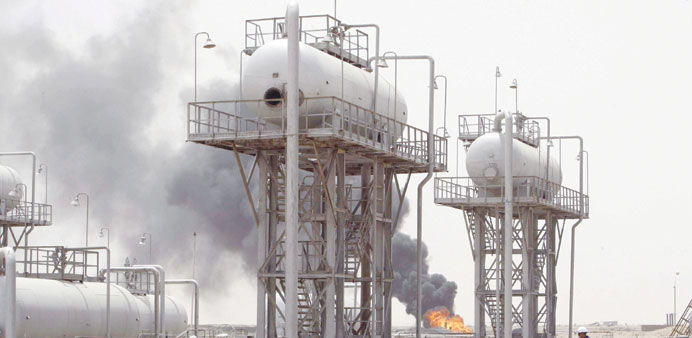
Iraq’s oil revival is stalling, and unless momentum is regained, Baghdad will report an output decline for 2013, its first after two years of robust gains, much to the relief of rival Gulf producers.
Swift work since 2010 at Iraq’s southern oilfields by the likes of BP, Exxon Mobil and Eni raised output by 600,000 bpd to 2.9mn bpd in 2012, turning Iraq into the world’s fastest growing exporter.
Even more impressive gains were expected this year. When Baghdad revealed a bold target of 3.7mn bpd at the December 2012 meeting of the Organisation of the Petroleum Exporting Countries (Opec), Gulf delegations were worried. A whiff of a market-share battle was in the air.
But a host of infrastructure and security problems will make Opec’s second-biggest producer struggle to keep pace with last year’s rates. Unless big gains are made, Iraq’s output will fall below 2.9mn bpd.
“Iraqis will be annoyed if the government is losing billions in (potential) oil revenues,” said a senior Iraqi oil executive, requesting anonymity.
Oil provides the lion’s share of Iraq’s government revenues and foreign exchange earnings.
For Opec, however, “This is good news. It delays the challenge from higher Iraqi production for another year,” said a Gulf delegate to the group, who requested anonymity. “And it’s good for the oil market. Prices will stay above $100 and that’s acceptable for everyone.”
The rise of US shale oil and a slackening of demand could force Opec to cut supply by up to 1mn bpd next year, analysts have said.
But slower growth from Iraq and ongoing outages from Iran and Libya will mean that big cuts from other members - mostly Saudi Arabia - are not needed.
July marks the third straight month of declines in Iraq’s production and exports, with output at 2.8mn bpd.
Its production is expected to return to growth next year of 400,000 bpd to 500,000 bpd, industry sources say, which would raise its average output to around 3.3mn bpd - still far below an official target of 4.5mn bpd.
While militant attacks are thwarting flows in the north, poor maintenance and technical problems are slowing progress in the south, the main driver of Baghdad’s oil expansion.
“Development in the south is passing through a very slow phase; momentum has been lost,” the senior Iraqi oil executive said. “We hope the fourth quarter will be more energetic.”
At the giant Rumaila oilfield, Iraq’s biggest producer and one of its oldest, the loss of output from old wells and major repairs at ageing de-gassing stations - core to the production process - have held the field back, Iraqi oil officials say.
Unreliability of southern export equipment and weather-related snags during the first quarter also resulted in major cutbacks at Rumaila, which is operated by BP along with China National Petroleum Corp, industry sources have said.
Iraq still has insufficient storage capacity, so when Basra Light exports are halted or sharply reduced, production at the oilfields has to be cut back sharply too - in the case of Rumaila by as much as 200,000 bpd, they said.
Once wells are shut in, they take a long time to restart, so Rumaila is still clawing back to higher rates. Production is now running at about 1.35mn bpd, similar to the average for 2012. The aim this year is to average 1.45mn bpd.
Iraqi oil officials still hope to see the country’s overall production reach 3.4mn bpd by the end of this year. Baghdad is targeting production of 9mn bpd by 2020.
Reaching that growth will require huge investment, and the international oil companies that signed up to tap Iraq’s reserves - the world’s fifth biggest - have held back on plans to increase spending because of the lack of sufficient pipelines and port facilities to raise exports, industry sources said.
Oil exports this year have already fallen below last year’s average of 2.4mn bpd, with July sinking to about 2.25mn bpd. Iraq’s 2013 budget is based on exports of 2.9mn bpd.
And shipments of southern Basra Light will fall by some 500,000 bpd in September when work is carried out at the vital southern oil export terminal.