


Agencies/London
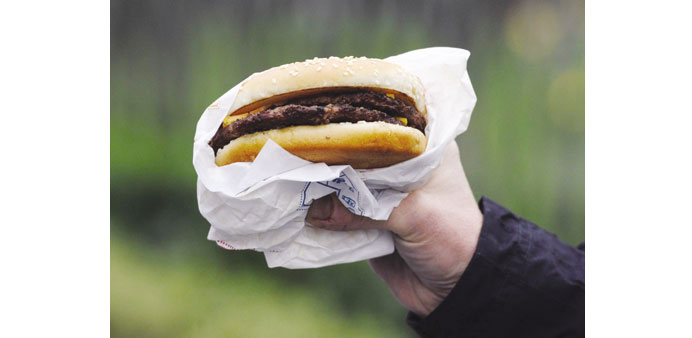
The world’s first burger with beef grown in a test tube will be served at an exclusive London venue this week - at a whopping price of £250,000, a media report said yesterday.
The burger will be made of “synthetic” meat grown from stem cells of a cow, the Daily Mail reported.
Mark Post, a scientist from Maastricht University in the Netherlands, believes this could help solve problems in the meat industry. “Right now, we are using 70% of all our agricultural capacity to grow meat through livestock. You are going to need alternatives. If we don’t do anything, meat will become a luxury food and will become very expensive,” he said.
A four-step technique is used to turn stem cells from animal flesh into a burger. First, the stem cells are stripped from the cow’s muscle. Next, they are incubated in a nutrient broth until they multiply many times over, creating a sticky tissue. This muscle is then bulked up through the laboratory equivalent of exercise - it is anchored to Velcro and stretched. Finally, 3,000 strips of the lab-grown meat are minced, and, along with 200 pieces of lab-grown animal fat, formed into a burger.
The process is lengthy and expensive, but it could take just six weeks from stem cell to the shop.
Scientists believe the public demonstration will be “proof of principle”, possibly leading to artificial meat being sold in supermarkets within five to 10 years. Stem cells taken from just one animal could, in theory, be used to make a million times more meat than could be butchered from a single beef carcass.
The reduction in the need for land, water and feed, as well as the decrease in greenhouse gases and other environmental pollutants, would change the environmental footprint of meat eating. Artificial meat could make a carnivorous diet more acceptable to the green movement as well as to vegetarians opposed to livestock farming on animal-welfare grounds. Animal-rights organisations have already given their qualified approval to the idea, and some vegetarians have said they would be happy to eat it given its semi-detached status from the real thing.
People for the Ethical Treatment of Animals (Peta), which runs a scheme offering a prize of £660,000 for the first person or organisation to produce artificial chicken meat, said that cultured meat would be ethically acceptable if it meant less slaughtering. “We do support lab-grown meat if it means fewer animals are eaten. Anything that reduces the suffering of animals would be welcome,” said Ben Williamson, a Peta spokesman.