


|
|
In the New York City mayoral race, is one candidate’s scandal the opportunity “everybody’s second choice” has been waiting for?
As former Congressman Anthony Weiner struggles to undo the damage to his campaign by the latest revelations about his racy online relationships, Bill Thompson, the city’s former comptroller and the only African American in the race, could see his prospects boosted.
With 45 days to go before the city’s Democratic primary, polls have consistently placed Thompson third behind Weiner and City Council Speaker Christine Quinn, the candidate most closely associated with the city’s current mayor, Michael Bloomberg, who leaves office at the end of the year.
But this week, a Quinnipiac poll found that if, as is expected, no candidate wins more than 40% of the vote and the race moves to a run-off, Thompson would beat Quinn 51 to 42%. Despite being the race’s front-runner, Quinn suffers from heavy disapproval for her role in helping to engineer the change in city law that allowed Bloomberg to seek a third term.
“If Thompson gets into a run-off, he wins,” said Quinnipiac’s Maurice Carroll. “Apparently he’s everybody’s second choice.”
While Thompson, 60, has spent much of the campaign battling the impression he is too cautious and lacks passion, his mild manner and moderate positions on key issues could position him as the obvious alternative to Democrats who lack a clear favourite.
Of course, this depends on Weiner dropping out of the race, or seeing his poll numbers tumble even further. This week, Weiner admitted he sent lewd pictures of himself to as many as 10 women over the years, including three in the two years since he resigned from Congress in disgrace over similar behaviour.
Four years ago, Thompson challenged Bloomberg’s re-election and surprised the political establishment when he lost by a mere five percentage points, despite being outspent by the billionaire mayor 10 to one.
This time, he has secured several key endorsements - from the United Federation of Teachers and the law enforcement United Uniformed Workers of New York - both of which could help his ground operation.
The largest US city, New York is also one of its most diverse has not elected a black mayor since 1989. And yet Thompson has so far failed to rally the minority vote. A Marist poll this week showed that, among African American Democrats, Thompson is running neck and neck with Weiner and Quinn.
The son of a trailblazing politician and a public school teacher, Thompson, who is Caribbean-American, grew up in the largely black Brooklyn neighbourhood of Bedford-Stuyvesant.
In the late 1990s, he served as president of the city’s Board of Education, where a New York Times editorial from 2001 described his tenure as “an unusual period of quiet progress.” His time as comptroller coincided with Bloomberg’s first two terms at City Hall.
In an interview with Reuters, Thompson called himself the “solid guy” and said in the end that would appeal to voters.
“I’m confident that leadership isn’t always just screaming, it is not always throwing things, it is about leading and doing better for communities,” he said.
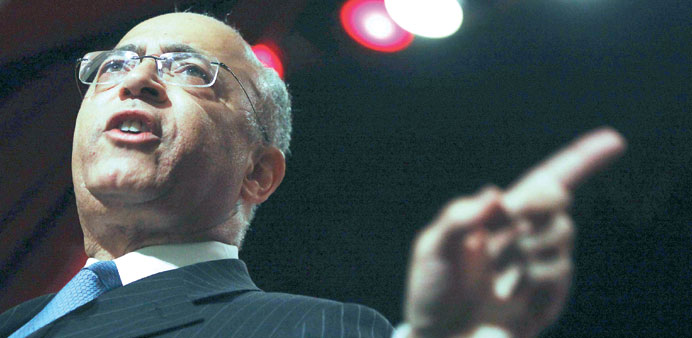
On the campaign trail, the bespectacled Thompson is not the sort of politician who dominates the stage. He often speaks with his arms crossed and when touting his record, often switches from “I” to “we.”
His moderate stance on stop and frisk, credited by the Bloomberg administration with helping to lower the crime rate and slammed by critics as racial profiling, has earned Thompson the ire of some of the city’s most outspoken black leaders.
“Being black is not good enough,” said Jumaane Williams, a City Council member from Brooklyn who was a lead sponsor of two bills that could curb police power in the city and an outspoken critic of stop and frisk.