


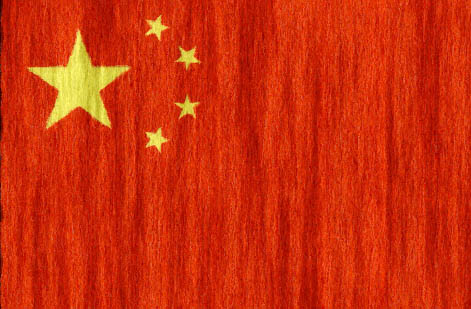
The Chinese coastguard entered waters disputed with Japan for the first time yesterday, straining an already tense situation as Tokyo mulled plans to establish a US Marines-style force to protect its islands.
Four vessels spent three hours in the territorial waters of a Tokyo-controlled archipelago, where they traded warnings with their Japanese counterparts.
The move — by vessels whose crews were likely to be armed, according to academics — marks an upping of the ante in the blistering row over ownership of the Senkakus, which Beijing claims and calls the Diaoyus.
It came the day Japan’s defence ministry recommended establishing amphibious units and acquiring surveillance drones to protect outlying islands.
“To deploy units quickly in response to a situation, it is important... to have an amphibious function that is similar to (the) US Marines,” capable of conducting landing operations on remote islands, it said.
The recommendation was part of an interim report approved by a high-level defence meeting yesterday, which said more hardware was needed to monitor distant islands.
“Our country has some 6,800 islands,” and one of the world’s largest areas of sea to patrol, Defence Minister Itsunori Onodera told reporters.
“So protecting the islands is an enormous task, especially if it only relies on manned aircraft as we do currently.”
Asked if there was a specific target for the moves, Onodera demurred.
“We don’t have a particular country in mind,” he said.
The report will be reflected in Japan’s long-term defence outline that is expected to be published towards the end of this year, but which a defence official said would not include any reference to a “pre-emptive strike” capability.
Japan’s constitutionally-mandated pacifism is cherished, but East Asia’s shifting power structures are testing received wisdom in Tokyo.
“We have this awareness that given changes in the security environment surrounding Japan, we have to discuss whether it is enough for us to depend on US forces in terms of capability to attack enemy territory,” a defence official told reporters.
Japan and the US have a security treaty that requires Washington to come to Tokyo’s defence if it is attacked.
The pact is part of a post-war settlement that left tens of thousands of American troops and much advanced weaponry in Japan, sometimes euphemistically referred to as an “unsinkable aircraft carrier”.
A decades old row over the ownership of the Senkakus came to a head in September when Japan nationalised three of the islands. Since then, China has become increasingly active in the seas around them.
But the presence yesterday in the islands’ waters of four possibly-armed Chinese coastguard vessels could take the dispute up a notch.
Although Chinese government ships have been in and out of the waters for many months, this is the first time they have ventured there since Beijing combined several agencies under the coastguard flag this week.
The official Xinhua news agency said the vessels had “patrolled the country’s territorial waters”.
Chinese media reported that the unified coastguard agency integrated marine surveillance, the existing coastguard — which came under the police — fisheries law enforcement and customs’ anti-smuggling maritime police.
Chinese academics were reported as saying that the move would mean more armed ships in the region, while Arthur Ding, a Taipei-based researcher at the National Chengchi University, said China’s patrols were likely to become “more frequent and more forceful”.
“As it is named the coastguard, (its ships) are likely to be authorised to carry light weapons so that they can enforce the law,” he said.
Observers warn that the Senkakus are a potential flashpoint that could even lead to armed conflict.
They say the presence of a large number of official vessels, some of them armed, increases the likelihood of a confrontation since a minor slip could quickly escalate.
In one of the most serious incidents of the row so far, Japan said a Chinese battleship locked its weapons-targeting radar on one of its vessels. Beijing denied the charge, accusing Tokyo of hyping the “China threat”.
While Japan’s coastguard is a civilian organisation, it is well equipped and well funded, and some officers aboard the vessels are believed to carry sidearms.
Article 9 of Japan’s constitution, drafted by US occupation forces after the country’s defeat in World War Two, renounces the right to wage war and, if taken literally, rules out the very notion of a standing army. In reality, Japan’s Self-Defence Forces are one of Asia’s strongest militaries.
Japan has for decades chipped away at the limits of Article 9. It has long said it has the right to attack enemy bases overseas when the intention to attack Japan is evident, the threat is imminent and there are no other defence options.
But while previous administrations shied away from acquiring the hardware to do so, Abe’s Liberal Democratic Party in June urged the government to consider acquiring that capability against missile threats.
Some experts say acquiring more substantial offensive capability would be a fundamental change to Japan’s defence policies. Others see it as a more evolutionary development.
Japan already has limited attack capability but to be able to hit mobile missile launchers in North Korea it would need more attack aircraft and intelligence, for which Japan would probably have to rely on the US, experts said. Hitting missile bases in mainland China would be an even bigger stretch.
Whether Japan, with a huge public debt, can afford the bill, is another question.
Measures to strike enemy missile facilities include attacks by aircraft or missiles and sending soldiers directly to the site, the Defence Ministry official said, but he added it was too early to discuss specific steps.
The ministry also said it would consider buying unmanned surveillance drones, create a force of Marines to protect remote islands, such as those disputed with China, and consider beefing up the ability to transport troops to far-flung isles.
Japan should also review its self-imposed ban on arms exports that has already been eased to let Japanese contractors participate in international projects and take new steps if needed, the ministry said in its report.
Clearer guidelines as to what equipment companies may sell and to whom could help companies such as Mitsubishi Heavy Industries Ltd, Kawasaki Heavy Industries Ltd, and Fuji Heavy Industries Ltd seek business overseas.
Support has grown in Japan for a more robust military because of concern about China, but opposition also remains.