


London Evening Standard/London
Britain is “on the mend”, George Osborne declared yesterday, as official figures showed growth has doubled since the start of the year.
Gross domestic product (GDP) rose by 0.6% in the three months to June, compared with 0.3% in the first three months of this year. It is the best growth since mid-2010.
The chancellor hailed it as proof that the country was “out of intensive care”, and business groups said recovery was gaining “a head of steam”.
The figures, from the Office for National Statistics, will add to growing optimism on the economy, which has been buoyed by the summer heatwave and the arrival of royal baby Prince George.
But the reaction of economists and traders was far more cautious.
Moody’s Analytics warned there were still huge downside risks, saying: “Full recovery still looks some way off, and the tentative pickup could easily be knocked off track.”
Yesterday’s headline GDP figure was in line with market expectations, but some traders had been quietly hoping for a higher number.
Marcus Bullus, trading director of MB Capital, said: “Deep down the markets will be disappointed.”
Joe Grice, head of the Office for National Statistics, said the nation had regained almost half of the 7.2% drop in output that followed the 2009 crash.
Osborne said: “These figures are better than forecast. Britain is holding its nerve, we are sticking to our plan, and the economy is on the mend — but there is still a long way to go and I know things are still tough for families.”
The FTSE 100 slipped 1% and sterling dipped by a third of a cent against the dollar, to $1.528, as investors speculated the Bank of England would try more monetary stimulus.
Sterling recovered slightly after that.
Labour insisted growth would have been higher and earlier but for the chancellor’s austerity.
Shadow chancellor Ed Balls said: “After three wasted and damaging years of flatlining, this is both welcome and long overdue.
“But families on middle and low incomes are still not seeing any recovery in living standards. This is the slowest recovery for over 100 years.”
He contrasted Britain with America, growing three times as fast, and claimed the difference was Barack Obama’s stimulant package.
David Cameron said the growth was “encouraging”, tweeting: “We are on the right track — building an economy for hardworking people.”
The key driver of growth was services, up 0.6% and almost back to pre-crash levels. Distribution, hotels and restaurants were up 1.5%. Construction rose 0.9%, manufacturing 0.4%, and agriculture 1.1%. But construction was still 16.5% below its peak.
Most analysts think the next quarterly figures will be slightly lower, pointing to growth for this year of about 1.1%.
CBI deputy director-general Neil Bentley said underlying conditions were “quite weak” but “we are heading down the road to recovery, even if there are likely to still be a few bumps”.
Economists say measures taken by the government to boost housing and an expected new push by the Bank of England to encourage more spending could galvanise the economy. Rob Wood, chief UK economist at Berenberg bank in London, said as long as growth of some kind continued, it could set off a virtuous circle. “The recovery is very unlikely to just unfold smoothly from here, and I think there could be a few hairy quarters,” Wood said. “Underneath that, though, it is a picture of monetary policy gaining traction, confidence returning, and the UK moving from clearly unsustainable growth onto a firmer footing.”
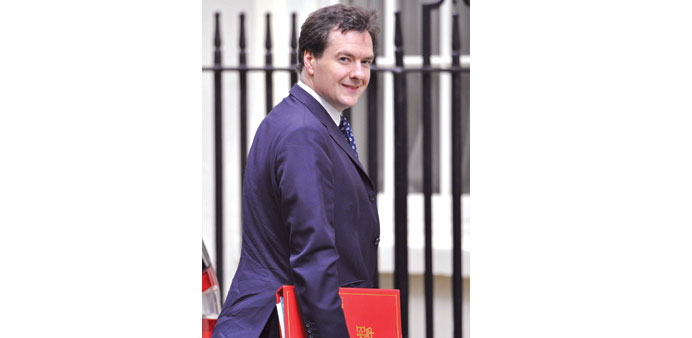
George Osborne