


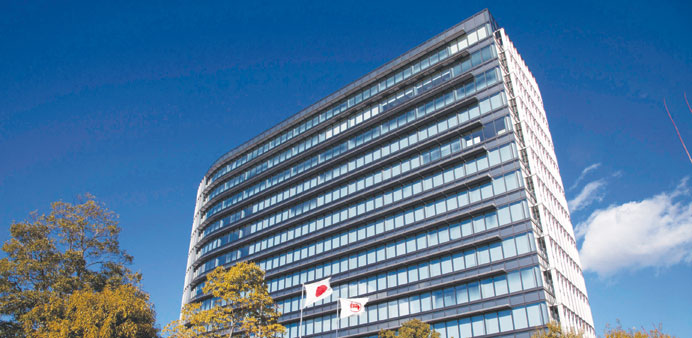
A view of the Toyota Motor Corp headquarters in Toyota City, Japan (file). The corporate giant has in recent months brought an infusion of outsiders to its inner circle and put a foreigner in full control of its operations in Latin America, as well as several other overseas markets.
Reuters/Nagoya, Japan
|
|
Mark Hogan, a former General Motors Co executive, says he often chided Toyota Motor Corp for its weakness in fast-growing Brazil and Argentina despite having reached the No 1 spot in the global industry.
To address perceived weak spots including an insular management style, the Japanese corporate giant has in recent months brought an infusion of outsiders — including Hogan — to its inner circle and put a foreigner in full control of its operations in Latin America, as well as several other overseas markets.
Akio Toyoda, Toyota’s president and grandson of the company’s founder, has set out to open up the ranks of top management after concluding that Toyota had become too big and global for its traditionally closed and centrally controlled management style.
Toyota’s management structure came under fire for its response to deadly accidents in the US and ensuing recalls of millions of vehicles at the end of the last decade, which centred around cases of unintended acceleration.
Executives at the headquarters in Toyota city, near Nagoya in central Japan, did not communicate well with US staff, and decisions, made mostly at headquarters, came too late.
Hogan, 62, was one of three outside board members Toyota appointed in June — the first such appointments in its 76-year-history and only the second non-Japanese to serve on the board.
Nicholas Benes, representative director of The Board Director Training Institute of Japan, said research shows that the most successful global companies employ more foreigners on their board or in senior positions as their overseas sales increase.
Toyota has only one foreigner on its 16-person board, but makes 75% of its sales abroad.
The Toyota group has more room to grow abroad — as Hogan’s chiding about Latin America suggests — and new markets will be key to achieving growth targets including a record 9.91mn vehicle sales globally in 2013.
Brazil’s auto market has more than doubled since 2005 and is now the world’s fourth largest, but Toyota’s market share there has been stuck around 3%, compared with nearly 15% in the US market.
“One of the few weaknesses of Toyota in the past, it’s been rather methodical, slow decision making process that eventually ended up here in Japan at all decisions no matter how global they were,” Hogan told reporters at a news conference on Tuesday in Nagoya.
Hogan said that, in addition to providing an outsider’s objective perspective to board discussions, he has been asked by Toyoda to help the company expand in Latin America by advising the recently appointed foreign executive overseeing the region.