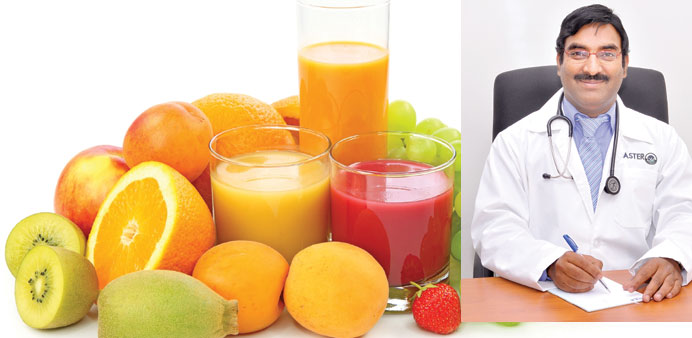
Dr Sakir Thurempurath is a family physician at Aster Medical Centre, Al Rayyan. Send your queries to [email protected]
By Dr Sakir Thurempurath
Summer heralds days of clear blue skies and golden sunshine. However, in the Middle East, as the mercury climbs steadily, the incidence of health problems ranging from heat stroke to gastroenteritis shows an upward swing. Appetites go in freefall while dehydration becomes a hazard. Ultraviolet rays play havoc with our body, making it increasingly imperative to safeguard ourselves.
At the moment, we are facing peak summer with temperatures hovering around 45-50 degrees C in Doha. Many of us are being in outdoors, exposed to the elements, whether we are working, travelling, tending to our gardens, walking to the grocery store or simply crossing the road. Many like summer for some reasons, but there are precautions that you need to take where heat is concerned.
Who are the most affected? The elderly and the very young are especially at risk during this time of the year, since they are not able to effectively counteract the effect of high temperatures on their bodies. These groups are prone to heat-related illnesses, which occur due to a steady buildup of heat in the body that overwhelm the body’s capacity to cool itself.
Dehydration is most dangerous for small children because a greater percentage of their body is made up of water. They have a higher metabolism rate than adults and lose water at a quicker rate.
Factory workers, laundry workers, building workers and drivers are at special risk.
What happens to your body when dehydrated?
Dehydration affects the whole body’s metabolism and it cannot properly function. Since a body is made up of approximately 70% water, losing large amounts of fluids in the body, very quickly, can have drastic results. One of the first symptoms of dehydration is a dry mouth and sticky saliva. Tear and urine production slow down and a person will become groggy and lethargic, easily irritated, and may experience muscle cramps. Blood pressure and pulse levels can fall dangerously low during dehydration. Not only is your body losing water and electrolytes it is losing critical nutrients such as calcium that the body requires to function properly.
What are the types?
Heat exposure: Outdoor and indoor
“Any person can be subjected to dehydration irrespective whether working indoor or outdoor. Contrary to common belief, sunstroke can even affect people staying indoors,” comments Dr Nizar, general physician at Aster Medical Centre, Qatar. “People unused to physical activity and exposed to excessive sun are also in danger of sunstroke,” he explains, enumerating the spectrum of health problems like heat exhaustion, heat burn, heat syncope (feeling faint and giddy) and sunstroke.
According to Dr Kunhali, general physician, Aster Medical Centre, Qatar, “About 70% of a person’s bodyweight is water content, which decreases progressively with age. Obesity also decreases the percentage of water in the body. The hypothalamus in the brain acts like a thermostat, adjusting body temperature to the outside environment. Excessive heat, humidity or physical activity results in the failure of this heat-regulating mechanism.”
Nose bleeding in summer
Some people, particularly those suffering from hypertension, are prone to nosebleeds. This occurs because inflow of hot air from the atmosphere ruptures sensitive arteries in the nasal region. Contrary to common belief, tilting the head backwards to stop the nosebleed may result in blood entering the food pipe. Instead, use thumb and index finger to apply pressure on the side of the nose that is bleeding until it stops. Pressing an ice cube rolled in a handkerchief against the nose cools the arteries and stops the bleeding.
Dehydration due
to related causes
Gastroenteritis and associated problems
Dehydration can be loss of water from the body owing to vomiting, diarrhoea, dysentery, cholera and other common conditions that can happen during summer. This dehydration is very dangerous and can lead to unconsciousness, coma and even death. Heat syncope is also caused by dehydration.
“Hepatitis A and E are water-borne diseases caused by consumption of contaminated water or fluids,” says Dr Antony, senior physician at Aster Medical Centre, Qatar. Reiterating that food and water-related diseases are common during summer, he cautions that “Eating cut, open and uncooked food can lead to acute gastroenteritis characterised by severe abdominal pains, vomiting and diarrhoea. Cholera is another fatal disease caused by contaminated food or water. The only precaution is to drink water from known sources. Avoid sugarcane juice, lime juice and lassi as well as chat, golgappa, salads and cut fruits from roadside vendors (if any, when going for vacation) or from less clean shops during the hot season.”
Skin conditions
“Skin afflictions with rashes and itching can be a major health irritant during summer,” says Dr Fuad Usman, consultant dermatologist at Aster Medical Centre. Widespread in hot and humid countries, miliariarubra (commonly known as prickly heat) occurs when sweat gland ducts become clogged owing to dead skin cells or staphylococcus epidermidis, a common bacterium present on the skin also associated with acne. The trapped sweat results in very small red blisters that usually itch and cause an intense pins-and-needles prickling sensation. Usually appearing in localised areas, it occurs most commonly in the face, neck, skin folds, under the breasts and scrotum. Preventive measures include bathing twice a day in lukewarm water, wearing light cotton clothes, and drinking plenty of water and fluids. Citrus fruits like oranges, grapes and sweet lime help the skin stay healthy.
Fair-skinned people are susceptible to sunburn.
Using proper sunscreen lotion half an hour before going outdoors and every three hours if you stay in the sun protects the skin against harmful ultraviolet rays. Workers who are fair-skinned tend to develop freckles and wrinkles that become worse because of dry skin.
Melasma is a tan or dark facial skin discoloration (hyperpigmentation) that occurs in sun-exposed areas. Though most common in the cheeks, upper lip, chin and forehead, it can occasionally occur in other areas exposed to the sun. Using opaque sunscreen daily is essential to treat melasma.
The combination of excessive sweating and body temperature leads to fungal infection between the thighs and other folds of the skin, upper chest and back in some workers. Keeping the body dry and wearing comfortable cotton clothes is the best precaution.
Eye allergies
“Allergic conjunctivitis is one of the common eye problems during summer,” says Dr Zaira, ophthalmologist at Aster Medical Centre. “Caused by inflammation of the conjunctiva (membrane covering the white part of the eye), lubricant eye drops relieve the burning sensation and help flush away the allergen. Cold compress gives symptomatic relief. If it becomes severe, it should be treated with mild steroid drops under an ophthalmologist’s supervision.”
Pollution-induced allergic conjunctivitis causes itching and watering; avoiding exposure to the cause or allergen is the best prevention. Dr Zaira advises: “Use protective glasses/visor when driving; masks when dusting or handling old books; and keep your surroundings clean.” Contact conjunctivitis happens in hot and humid places and the best way to avoid infection is to wash your hands before touching the eyes. “Always wear protective sunglasses when you go out in the sun,” she emphasises.
Dehydration symptoms
Thirst
Less-frequent urination
Dry skin
Fatigue
Light-headedness
Muscle cramping
Dizziness
Confusion
Dry mouth and mucous membranes
How can you prevent?
The best approach for dehydration is prevention. You should be consuming 3-4 litres of water daily. This amount should increase if you will be exercising or working in the heat such as 5-6 litres. The more you sweat the more water your body loses. If you are not properly hydrated, your body will lose fluids at a dangerous rate and you will become dehydrated.
Avoid direct exposure to sun.
Wear loose-fitting, light-colored clothes.
Keep skin covered as much as possible.
Ensure proper ventilation inside the house.
Use protective devices like sunglasses, caps, helmets, and umbrella.
Use a sunscreen of SPF 30 or more.
Shower at least twice a day.
Wash your face often with cold water.
Avoid uncovered, uncooked food and drink from vendors.
Drink only mineral water while travelling.
While morning walk ...
Take precautions when going for morning walks during summer. Ideally, they should start early and return home before the sun is up. The duration of the walk can also be reduced. Walking in the shade and drinking water, preferably with a pinch of salt, before and after the walk is a good idea.
Also, please consider
Bathing twice a day in lukewarm water.
Wearing light cotton clothes.
Drinking plenty of water and fluids.
Take ‘cool foods’ such as yoghurt, fruits like oranges, grapes and sweetlime, vegetables are particularly accepted. ‘Hot foods’ such as oily foods, meat, poultry and fish can be better avoided. It is better to reduce tomato and potato and increase carrots.
Fair-skinned people are susceptible to sunburn. Using proper sunscreen lotion half an hour before going outdoors and every three hours if you stay in the sun protects the skin against harmful ultraviolet rays. Workers who are fair-skinned tend to develop freckles and wrinkles that become worse because of dry skin.
Please note
Never leave your children in parked vehicles.
Pay attention to weather forecasts.
‘Do not be overly ambitious about job’, health should come first.
Avoid the most intense sun.
Wear a hat (from early hours) in the day.
Use (and pack) sunscreen.
Take breaks while at work.
Look for shade in-between the work.
If dehydrated …
If you or someone you know shows the signs of dehydration, you should follow these steps immediately.
Stop all activity and rest.
Get out of direct sunlight. Go to a shaded and cool area.
Elevate the feet and remove extra layers of clothing.
Drink at least 2 liters of cool liquids over the next two to four hours.
If you become too hot, you should refrain from any heavy activities for the next 24 hours.
See a doctor immediately if the person loses consciousness, the person becomes dizzy or lightheaded or if any of the other symptoms worsen. If the person has lost consciousness, he may have suffered sunstroke. Immediate medical attention is required after a heat or sunstroke as brain damage or even death can occur.
Hydration
On hot days, your body can lose large amounts of water through perspiration. The general rule is that you can sweat roughly a quart of water every hour — and even more when working or in direct sunlight. Working at higher altitudes will also accelerate the loss of body fluids. In arid climates, you may not even notice how much you are sweating because of rapid rates of evaporation. Moreover, as you perspire, you lose vital minerals from your system.
Start the hydration process before you go out. Begin to hydrate a couple of hours before you hit the trail.
Pay attention to your body. Drink before you start getting thirsty.
When you work outside, if you experience a lag between when your brain tells you that you need water and when your body actually begins to require more fluids. Studies that are more recent suggest that you should trust your body to let you know when you need to drink.
The key is getting to know our own body’s reactions.
Drink frequently. Instead of guzzling a bunch of water all at once, take smaller and more frequent drinks of water.
Cold water is best. Your body will process cold water more quickly. Fill up your water bottle or with ice to keep water cool for as long as possible while you’re out.
No, beer does not count. Alcohol can speed up dehydration because it’s a diuretic. So will caffeine-laden energy drinks.
How you know you are properly hydrated?
Check your urine. If you are properly hydrated, you should be able to produce a large amount of light-coloured, clear urine. If the urine appears dark and concentrated, you may be dehydrated.
Salt depletion during dehydration
In addition to restoring fluids, you need to maintain your body’s proper levels of sodium, magnesium, and potassium. Salt residue on your clothing or the inside of your hat is a possible warning sign of hyponatremia. Therefore, as you rehydrate, alternate water intake with consumption of fluids with electrolytes, or sports drink.
How to prevent salt depletion?
Eat snacks with salt. Salt in foods can help restore sodium levels in the bloodstream. So in addition to drinking plenty of fluids on hot days, be sure to snack frequently on foods with salt, such as nuts, pretzels and fruits.
Oral Rehydration Salts (ORS): Dissolve in 1litre of fluid and drink frequently.
To treat the
complications
The first symptoms of sunstroke are extreme tiredness, body pain and high body temperature. Left untreated, the skin becomes hot and dry; there is hyperventilation, mental confusion and eventually unconsciousness. The first thing a person with such symptoms needs is plenty of fluids to replenish water in the body. Make him lie down and loosen his clothes. Ensure there is proper ventilation. Make arrangements to get him hospitalised and put on IV. If prompt action is not taken, the kidneys followed by the lungs and the brain will be affected.
Ramadan and dehydration
When we don’t eat during a fast, at about 8 hours after our last meal our bodies start to use energy stores to keep our blood glucose (sugar) levels normal. For most people, this is not harmful. If you have diabetes or if you are dehydrated, your body cannot use the glucose as well. Dehydration is common during fasting, but the risk is increased during hot weather. It happens when the body loses more water and salts through breathing, perspiring and urinating and the high humidity adds to the problem during these days.
It is advised to rehydrate adequately on fast time and drink water when felt faint even on fasting. Otherwise it may lead to heat stroke. Outdoor jobs can be better restricted to night time. If ill chronically such as diabetic and has renal problems including urolithiasis where water intake cannot be restricted, should pave a particular attention for hydration. Yoghurt and watermelon is especially helpful for preventing dehydration during Ramadan.