


 |
| “After two years of training, HMC sponsored my education in the US, which I am very grateful for” |
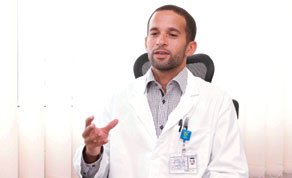
An occupational therapist at the Hamad Medical Corporation Alaa Festok has become the first Qatari man and the second national to pass the US-based National Board for Certification in Occupational Therapy (Nbcot) examination.
Festok, who joined the HMC’s Rumailah Hospital in 2010, is now a US-Registered Occupational Therapist (OTR).
Festok, who chose occupational therapy as a career after training at HMC said: “I read an article in the newspaper about a programme for Qatari high school graduates interested in a career in rehabilitation. HMC took about ten people and trained us in rehabilitation services such as physical, occupational and speech therapy.”
Festak, who looked set to pass on his acquired knowledge and enthusiasm to his colleagues, mentioned that he has worked with a colleague from Nigeria who helped his interest in the field to grow.
“After two years of training, HMC sponsored my education in the US, which I am very grateful for,” Festok said.
He became eligible to take the examination after completing his Masters of Occupational Therapy from Saint Louis University in 2009 – the first Qatari man to acquire the degree from a US university.
The Nbcot examination is based on a comprehensive practice analysis that determines critical knowledge, skills and abilities of occupational therapists.
The Nbcot provides a world-class standard for certification of occupational therapy practitioners. It develops, administers and continually reviews a certification process that reflects current standards of competent practice in the field.
Now working full time in the HMC Hand Therapy unit, Festok is one of 13 occupational therapists caring for some 125-150 patients per day, most with work-related or road accident-related injuries.
Festok encouraged fellow Qataris to explore possible careers in healthcare and pursue whatever interests them saying: “HMC may consider supporting them financially if they have good grades and show that they are willing to learn.”
Occupational Therapy Department chief Sultan Salem Hammam al-Abdullah said: “We are proud to have Alaa here with us,” adding that Festok also plans to go for the prestigious Certified Hand Therapist credential after the required five years of specialised practice as a hand therapist.
Al-Abdullah and Festok are among five Qatari occupational therapists currently practicing in Qatar, four of whom work at HMC.
“Being an OTR basically assures the public that the occupational therapist who is treating them has reached a certain standard of competency,” Hand Therapy unit acting supervisor Monique LeBlanc said.
LeBlanc explained that the OTR is a required qualification for all occupational therapists practicing in the US saying: “Alaa’s eagerness to learn and dedication to the unit make him a valuable asset to HMC.”
Al-Abdullah and LeBlanc underscored the importance of Qatari nationals’ involvement in healthcare for the country’s development, as well as in terms of providing culturally competent care to the growing population.
“It is difficult for patients when they cannot communicate clearly and often-times language can cause some communication barriers. So, to have a Qatari on the team who is able to communicate with the patients and understand them on a cultural level is very comforting for the patients,” LeBlanc said.
She commended the support extended by HMC for Qatari staff in terms of professional development, helping them to pursue continuing education and become certified in their area of interest.