


Reuters/Dubai
Bluechips lifted Qatar’s bourse to a near five-year high yesterday as investors bet on long-term growth in key industries in the country, as most regional markets gained.
Doha’s benchmark climbed 0.8% to its highest close since September 2008. It has advanced in eight of the last nine sessions.
Large-caps have led the recent rally. Qatar National Bank (QNB) added 1.8% to hit a new all-time high. The lender last week posted a 24% rise in quarterly profit which beat analysts’ expectations.
Industries Qatar (IQ) gained 0.6% and Commercial Bank of Qatar advanced 1%.
“There’s a clear indication that the buying is more on macro Qatar interest than a valuation play on stocks,” said Ahmed Shehada, head of trading at QNB Financial Services. “The names that have moved the market should have hit a plateau in terms of valuations, although by the volumes that they’re seeing, I don’t think it will happen.”
Index compiler Morgan Stanley Capital International (MSCI) upgraded Qatar to emerging market status from frontier market in June and following a speculation-driven rally, provisional index constituents are seeing increased investor interest.
Qatar will have a 0.45% weighting in the emerging market index, effective June 2, 2014. A flow of about $500mn from funds benchmarked against the index will go into stocks like QNB, IQ and telecom operator Ooredoo. Active funds have already begun cherry-picking stocks.
These firms are up between 16.9 and 26.8% year-to-date, outpacing the corresponding exchange gain of 14.2%.
In the United Arab Emirates, Dubai’s measure failed to close above 2,500 points after breaking the major chart resistance level intra-day, suggesting investors need confirmation from second-quarter earnings to increase risk. The index was little changed at a 56-month high and has edged past 70 on the relative strength index into overbought territory.
Abu Dhabi’s benchmark climbed 0.6%, extending 2013 gains to 45.3%.
In Saudi Arabia, the index slipped 0.4%, its third decline in the last four sessions, as large-caps dragged.
Sentiment towards the petrochemical sector was negative this week as firms posted earnings that missed estimates, while larger banks showed limited profit growth in the second quarter. The indices for petrochemicals and the banking sector dipped 0.2 and 0.6% respectively yesterday.
“The driver of the market going forward will be mid-caps - investors are mostly aware of the lagging growth in larger corporates,” said Hesham Tuffaha, a Riyadh-based fund manager.
Retail and industrials are top among sectors with a strong growth scope, Tuffaha added.
Elsewhere, banks helped lift Oman’s index, which rose 0.6%. Bank Sohar climbed 2.8% to its highest level since November 2010. The stock is up for a third session since competitor Bank Dhofar said it wanted to start merger talks with its smaller peer.
National Bank of Oman advanced 2.5%. It posted a flat second-quarter net profit before the market opened but beat the average forecast of analysts.
In Kuwait, the index gained 0.3% to 7,944 points, whereas the Bahrain index was flat at 1,189 points.
In Egypt, the main benchmark was little changed. It hit a six-week high on Tuesday on optimism over the formation of an interim government, two weeks after the military overthrew Islamist President Mohamed Mursi.
However, continuing protests by Mursi supporters mean the uncertain political environment is holding back further buying by investors.
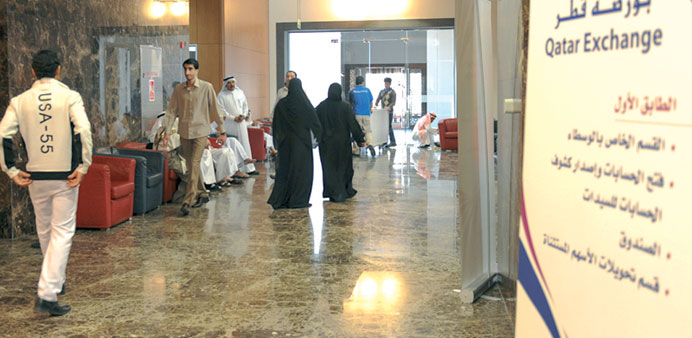
Doha’s benchmark climbed 0.8% yesterday to its highest close since September 2008.