


IANS/New Delhi
In a clear signal to global investors that economic reforms will be fast-tracked and norms for inflow of overseas capital eased further, the government yesterday decided to hike the foreign direct investment limits in a host of areas, notably telecom, insurance and defence.
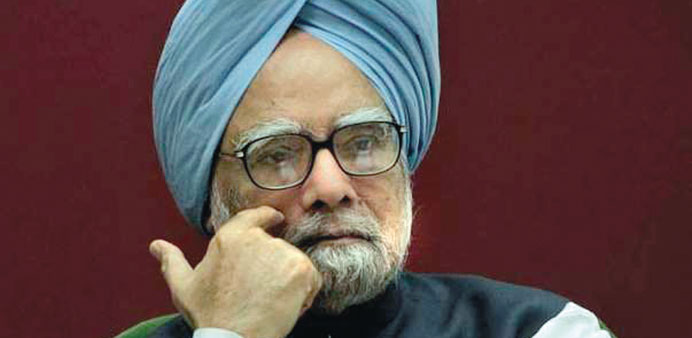
The major executive decision was taken at a meeting specially convened by Prime Minister Manmohan Singh to discuss sectoral foreign investment caps and attended by most of the key economic ministers, Commerce Minster Anand Sharma told reporters here.
The decisions taken include hiking foreign direct investment limit in the insurance sector to 49% from the existing 26% and in the telecom sector to 100% from 74%.
Despite opposition from Defence Minister A K Antony, the government has decided to further open up defence sector for overseas investments.
“In defence production, 26% through FIPB (Foreign Investment Promotion Board) route stays. For state-of-art technologies, FDI beyond this to be approved through CCS (Cabinet Committee on Security),” Sharma said.
“Proposals beyond 26% where the project brings state-of-the-art technology, the decision rests with CCS. Only those proposals will be recommended (to the CCS) where state-of-the-art technology is involved,” he added.
The minister said the overseas investments would help provide access to state-of-the-art technology to Indian firms involved in defence production.
This apart, several approvals, earlier requiring their routing through the Foreign Investment Promotion Board (FIPB) have been brought under the automatic route.
“Basically, under the automatic route, you apply, comply and go ahead,” an official in the commerce and industry ministry explained.
In single-brand retail trading FDI up to 49% will now be allowed through the automatic route.
“For 49% to 100%, the investment decision will be routed through FIPB,” Sharma said.
For the telecom industry, the decision to allow 100% foreign equity will help a host of domestic promoters reeling under billions of dollars of debt.
The move will allow the companies like Vodafone Group, Telenor and Sistema to operate in India without a local partner.
Experts said in defence, apart from facilitating flow of money, the move will fetch some state-of-the-art technology that was hitherto elusive.
The government’s move is expected to help curb the current account deficit and provide support to the battered rupee, which hit a record low of 61.21 against a dollar last week.
The rupee has lost almost 10% of its value in the past two months.
The rupee is the worst performer among the emerging markets currencies so far this year. The high current account deficit has been putting pressure on the Indian currency. The current account deficit, the difference between the country’s imports of goods, services and transfers and exports, touched a record high 4.8% of the GDP in the financial year ended March 31, 2013.
Economic growth slumped to 5% in 2012-13, the lowest in a decade.
Experts said the liberal policy would result in great flow of overseas investments in the country and help control the current account deficit and revive economic growth.
“This should bring FDI into the country, which will help in managing our current account deficit and encourage fresh investments,” said Naina Lal Kidwai, president, Federation of Indian Chambers of Commerce and Industry. The FDI inflows to India declined to $22.42bn in 2012-13 from $36.50bn in the previous year.
IN A NUTSHELL
*FDI limit in telecom to be hiked to 100% from 74%
*Cap in insurance sector to be raised to 49% from 26%
*Up to 49% FDI via automatic route in petroleum and natural gas refining
*In single brand retail, up to 49% under automatic route; beyond 49% through the FIPB route
*In defence production, 26% FDI limit to stay; beyond 26% it has to be approved by the Cabinet Committee on Security
*Upto 49% FDI through automatic route allowed in commodity exchanges