


Reuters/Havana
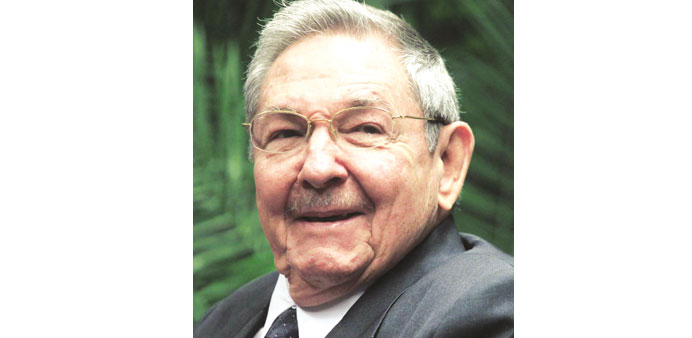
Cuba’s food-rationing system marked 50 years yesterday amid controversy, with President Raul Castro facing popular resistance to his plans to end the benefit as he moves the country from broad subsidies of goods and utilities to targeted welfare.
Castro began market-oriented reforms in 2008 after he replaced his ailing brother Fidel, who installed a communist government on the island nation in the early 1960s.
But the younger Castro has criticised the rationing system as “paternalistic, irrational and unsustainable.”
The country spends 25bn pesos (around $1bn) annually on rationing, subsidising 88% of the cost, according to a source close to the government.
The law establishing the system, known as the “libreta,” was passed in 1962, and hundreds of ration stores opened on July 12, 1963.
A lifesaver for some and obsolete for others, eliminating rations has proved perhaps the most controversial policy Castro has proposed.
“For many, the ration is necessary because it guarantees each month a little rice, a few eggs, some sugar and milk,” said Ignacio Lima, who manages a small, dark and dingy ration outlet in Havana. “It is not enough, but it helps a bit and then you go find what you need on the open market.”
After he spoke with a reporter, four shoppers at the store quickly began debating the merits of the system - a discussion much like the one that has raged across the Caribbean island for decades.
Olga Raquel Vazquez, 49, said there had to be a better way to feed people. “The time has come for the ration to disappear,” she said. But Verena Rodriguez, a 72-year-old pensioner at 250 pesos per month, the equivalent of $10 dollars, insisted she couldn’t live without her “libreta”.
“It has to stay because without the ration some of us will eat and others won’t,” she said. “Who has money can buy everything and who doesn’t can’t,” Rodriguez said, adding that with 10 pesos, or around $0.45, she could buy what was coming to her on the ration this week.
Cuba has become a more stratified society since the collapse of its benefactor, the Soviet Union, in the early 1990s. Reforms, such as an opening to international tourism and foreign investment, the loosening of restrictions on small businesses and the welcoming of family remittances, were introduced to manage the economic and social crisis that followed. As a result of the reforms, small businessmen, farmers, residents with family abroad and others now enjoy an income many times that of state workers and pensioners, yet everyone receives the ration and subsidised utilities.
“Undoubtedly, the ration book and its removal spurred most of the contributions of the participants in the debates, and it is only natural,” Castro said in a speech to a Communist Party Congress in 2011, after sponsoring three public discussion on reforming the economy since taking over from his brother.