AFP/Beirut
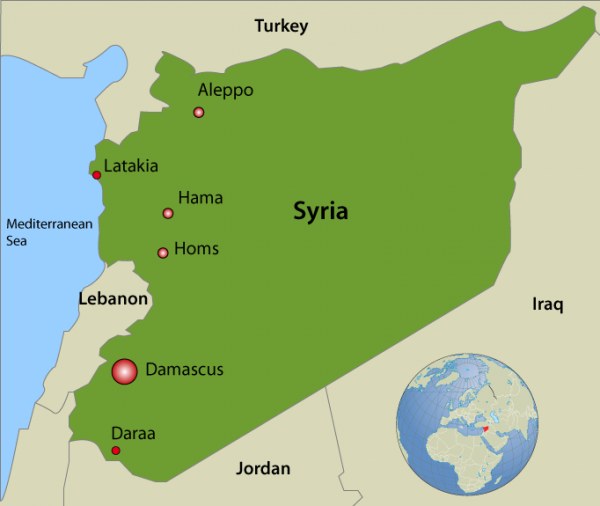
An army assault on Homs in central Syria entered its 13th day yesterday, as the Muslim fasting month of Ramadan brought no relief to people in rebel areas, activists said.
“There isn’t a minute that goes by that we do not hear the sound of a rocket or a shell hit the besieged (rebel-held) neighbourhoods, especially Khaldiyeh and Bab Hud,” said Homs-based activist Yazan.
Districts in central Homs, dubbed “the capital of the revolution” by activists, have been under army siege for more than a year.
Speaking to AFP via the Internet on the second day of fasting, Yazan said that “even before Ramadan, we were down to one meal a day”.
Throughout the blockade, rights groups have warned of critical humanitarian conditions in rebel areas of the city, which come under daily shelling and frequent aerial bombardment.
The UN has said that some 2,500 civilians are trapped in the besieged neighbourhoods, and activists say there is no way out.
“The situation now is especially difficult for families who were forced to flee their homes because of the intense shelling” that accompanied the latest assault, said Yazan.
For about six months, people living in the besieged neighbourhoods of Syria’s third city have relied on firewood or diesel fuel for cooking.
“We eat rice and bulgur to break our fast in the evening, and thyme and olives before daybreak,” said Yazan. “This is our second Ramadan under siege.”
During Ramadan, Muslims gather with family over festive meals after sunset when they can break the dawn to dusk fast.
In besieged Homs, however, “there is no electricity, no generators and no water wells” any more, said Yazan.
Lebanon’s Shia Hezbollah movement is taking part in the regime’s military assault on Homs, says the Syrian Observatory for Human Rights.
Despite the difficulties and “the military imbalance, we plan on resisting here”, said Yazan.
The army meanwhile renewed its bid to storm the rebel areas from an entrance point near the 11th century Khaled Bin Walid mosque, which has itself been hit by shells, said the Syrian Revolution General Commission.
“Very fierce battles also raged on all the fronts,” said the SRGC, a grassroots network of activists.
Despite earlier calls by UN Secretary General Ban Ki-moon and the Syrian opposition for a Ramadan ceasefire, the conflict only looked set for further escalation.
The rebel Free Syrian Army, meanwhile, said it had received a shipment of weapons and ammunition but did not reveal where they came from or where they were deployed.
We have “finally received shipments of ammunition, Kalashnikov machineguns and anti-tank missiles”, FSA political and media co-ordinator Louay Muqdad told AFP by phone.
The weapons “were not sent by the European Union or the US”, he said, in reference to Western promises to back the rebels.
Muqdad said although the weapons were used to “destroy more than 90 regime tanks and a massive amount of checkpoints throughout Syrian territory”.
But he said that “these arms are insufficient for all our battles”.
He also described the siege imposed on rebel areas of Homs as “suffocating” and said the FSA is trying to move in ammunition, humanitarian aid and food. “We are suffering from shortages,” he said.
The Observatory estimates that more than 100,000 people have been killed in Syria’s raging war.
On Wednesday alone, at least 102 people were killed in violence across the country, the group said.
Syria’s war began with peaceful demonstrations calling for regime change but morphed into an insurgency after the regime unleashed a crackdown on dissent.
Lebanese wary of Syrian refugees: survey
A majority of Lebanese believe the influx of Syrian refugees in their country threatens national security, Norway’s Fafo research foundation said in a report obtained yesterday by AFP.
In the survey carried out by Fafo in late May, 900 people were interviewed across Lebanon, a country of more than 4mn people which now hosts around 600,000 Syrian refugees.
The findings showed that “52% of the respondents believe that the Syrian refugees are posing a threat to national security and stability,” the survey said.
About 54% said Lebanon “should not receive more refugees” while 82% said refugees are taking jobs from the Lebanese and causing wages to fall.
About half of those interviewed said the Syrians were “supported financially to an unfair degree”.
Many Lebanese also said they cannot trust the Syrian people, with 61% saying they are “not comfortable” having Syrians as close neighbours.
In all, 67% - or two in three polled - said they are “uncomfortable sharing a meal with Syrians” and 82% said they would not be happy if a family member married a Syrian.
More than 90% of those surveyed said that the Syrian conflict “has had a negative impact on the Lebanese government’s capacity to protect Lebanese citizens and govern”.
The conflict that erupted in Syria in March 2011 has spilled over the border into Lebanon where supporters and opponents of the Damascus regime have clashed frequently. Two-thirds of those polled said the UN should open camps in Lebanon for Syrian refugees as it did in Jordan and Turkey.
On Wednesday, Lebanon’s ambassador to the UN, Nawaf Salam, vowed his country will keep its borders open to refugees from Syria but said the government may have to consider opening camps.
“Lebanon will not close its borders. Lebanon will not turn back any refugee,” Salam said, adding however that Beirut “needs concrete international help to cope with this growing problem”.